The last few weeks have been filled with concerns about where we will live when my husband and I are both here and the house in Norway has been emptied and sold. I have already lived longer in the tiny, but posh apartment in the city than planned, and we have to find new place. Like good geeks, the internet was our main tool searching, and Boliga.dk is an extremely useful site. By now we have been all over the place, looking at apartments in 8tallet (extremely tempting, but way out and no storage space what so ever), several different apartment co-ops as well as fully owned apartments in Amager, Østerbro, Fredriksberg, Nørrebro (the famous, or infamous, Jægersborggade) and the city, as well as houses, regular and in garden co-ops. I spent every week-end for 6 weeks riding my bike around to see houses and apartments, and I have the muscles to prove it! However, when we finally decided to bid, it was for an apartment in the street where I already live. Smaller than planned, not that cheap, but I get to stay in the City.
So we keep living in a street with five (perhaps six?) restaurants and cafés, at least two of them extremely good and the rest pretty decent. There's a baker around the corner, as well as a gourmet deli. The street has a cleaner, a designer furniture store and a very trendy hairdresser - and it's just two blocks long. To get to anything like what I find in this street would include airplane tickets if I started out in Volda - or at least a 2 hour drive, including the ferry trip.
Buying property in Copenhagen is however a very different process from doing the same in Norway. Here it's not just adviced to have a lawyer, they actually do stuff that's practical and useful, and it's expected that they particpate in the process. Since one is as good as another, we counted on advertising to help out, and contacted one that advertised on Boliga. But apart from a lawyer, I need a very good relationship to a bank, since they want to money to be guaranteed and secured well in advance. Coming from the Norwegian system where only a small preliminary sum changes hands in advance, and then the real transfer happens with the transfer of the property, it's unexpected that they want a guarantee for the whole sum 45 days in advance, and the final payment to be available 15 days in advance.
Also, we are foreigners. That's not really a big deal, since we're both Scandinavian, I work here and we're both planning to live here. If I had planned to stay mainly in Norway and commute during the week, as some colleagues do, I'd have a lot more of a problem. Danish rules for who can own property are pretty strict.
The process is slowly rolling along though. And then we'll be living in Copenhagen. This week-end was a typical example of what we can do and experience in the city. Friday, after visiting the lawyer, we walked across the street into Illum Bolighus, ready to spend half an hour dreaming about designer furniture. And look, they serve wine too! What's better than free wine, lovely furniture and a head full of plans for a new place to live?
So there we were, happily sipping and enjoying the exhibition, when a very nice and enthusiastic man paused and asked us "you like that table, don't you?" We told him exactly what we thought about it - lovely, but too low for us. That made him disappear to come back with a small side-table, and while we watched he demonstrated how the tables could have different heights by ordering new legs, and several other things about the material. All the while he was talking about the design in a very proprietary fashion. "I thought it looked better with a metal finish. I wanted some variety." No, he did not sound like your regular eager salesman, and I peered at his name tag. It was one of the designers! It turned out that Illum had a special exhibition for the launch of some of the new designs in the Naver collection, and our fascination with good carpentry and light, elegant designs had caught the attention of one of the designers, as he saw us caressing his table.
Now, you might think that I could never have met a designer like that back in Norway? Think again, he has designed both for Hjellegjerde and Ekornes, furniture factories from Sunnmøre, the part of Norway where you find Volda. Still, I have to admit that with the following late night of discussions of design and architecture with a friend who's an architecture student, then a trip to Arken with another friend, who happens to be an artist and designer (a topic to this week-end, I think), to be followed up with restaurant trips to take advantage of the Copenhaven Restaurant Week, we felt very far from the quiet weekends in Norway, with long walks in the mountains and friendly togetherness in front of the fireplace, when we didn't work. And I also have to admit - I love the change.
Monday, March 28, 2011
Thursday, March 17, 2011
Nuclear explosions timeline
Beautifully and poetically rendered, all the nuclear explosions in the world between 1945 and 1998.
Monday, February 28, 2011
The social side of gaming
Last chance today!
**************************************************************************
**** FINAL REMINDER: DEADLINE / CALL FOR ABSTRACTS ******
INTERNATIONAL CONFERENCE "THE SOCIAL SIDE OF GAMING"
************* CFA ENDS THIS MONDAY 28 FEBRUARY *************
**************************************************************************
Dear all,
this is the final reminder that the Call for Abstracts of the international conference "THE SOCIAL SIDE OF GAMING" (21-23 July) will end *** next MONDAY, 28 FEBRUARY ***. So please send in your abstract as soon as possible - there won't be an extension of the Call. For further information about the conference topics and the terms of submission please have a look at: https://sofoga.uni-hohenheim.de/85673.html
We are also glad to announce the confirmed keynote speakers. They are
RICHARD A. BARTLE (University Essex, UK, co-author of the world's first virtual world, MUD)
MIA CONSALVO (MIT, Boston, USA, current President of the Association of Internet Researchers, author of "Cheating")
MARK GRIFFITHS (Nottingham Trent University, UK, leading expert in research on digital games addiction)
We are also planning a panel discussion with high class industry representatives and some other events that will be announced soon. For more information regarding the conference, please head over to our conference site at:
https://sofoga.uni-hohenheim.de/conf2011.html
We updated the website to answer some of your questions regarding the call, the conference fee, the publication/proceedings volume, accomodation, flight connections, travel grants etc. (s. also our mini-FAQ below).
Please note that some people were experiencing difficulties registering via the registration form due to technical reasons. If you did register, but didn't receive a confirmation yet, please contact us directly via gamescon2011@uni-hohenheim.de .
We hope to see you in July!
With kind regards
Thorsten Quandt
(for the organization committee)
****** CONFERENCE FAQ *****
We also received several questions regarding the event. Here's a mini-FAQ - more answers can be found online at
https://sofoga.uni-hohenheim.de/conf2011.html .
* How much is the registration fee?
There is a very moderate registration fee of EUR 50,- for speakers and participants with a 100 % position. The registration fee for researchers with a 50 % position is EUR 30,-. We try to keep the prices low so that everybody who wants to participate can participate. Science shouldn't be about money.
* How much do I have to pay for a flight to Stuttgart? Is it difficult to get there?
The international Airport of Stuttgart is just 10 minutes away from the University (via taxi). There are connections to all major European cities and even transatlantic connections. Furthermore, you can fly in via Frankfurt or Munich. There are some discount airlines flying to Stuttgart, including airberlin, germanwings and TUI (but also Lufthansa, SAS, British Airways, Delta etc.) - so return tickets to major European cities start around EUR 30,-. If you book early, then this might be your cheapest international conference ever!
* I am a PhD student and don't have the money to travel to your place. However, I have a fascinating abstract and would love to visit the conference!
Please consider sending in your abstract nonetheless. We will offer a limited number of travel suppurt grants for international PhD students and researchers on a 50 % position (or less). Preference is given to PhD students/researchers from developing/transitional countries with top abstracts. Please note that this option is subject to availability. The overall availability of funds is limited, so the actual grant size and number is depending on the number of applications and their quality. If you are a member of the named group and think about applying for a grant, please contact us directly via gamescon2011@uni- hohenheim.de. We can provide you with more information on a per case basis.
* Will there be a proceedings volume?
We plan to publish the best conference papers and some invited papers in an edited volume. It won't be your standard proceedings volume, but a coherent book on the social aspects of gaming, aiming at the worldwide book market. We are currently in talks with major international publishers about the details of the publication.
**************************************************************************
**** FINAL REMINDER: DEADLINE / CALL FOR ABSTRACTS ******
INTERNATIONAL CONFERENCE "THE SOCIAL SIDE OF GAMING"
************* CFA ENDS THIS MONDAY 28 FEBRUARY *************
**************************************************************************
Dear all,
this is the final reminder that the Call for Abstracts of the international conference "THE SOCIAL SIDE OF GAMING" (21-23 July) will end *** next MONDAY, 28 FEBRUARY ***. So please send in your abstract as soon as possible - there won't be an extension of the Call. For further information about the conference topics and the terms of submission please have a look at: https://sofoga.uni-hohenheim.de/85673.html
We are also glad to announce the confirmed keynote speakers. They are
RICHARD A. BARTLE (University Essex, UK, co-author of the world's first virtual world, MUD)
MIA CONSALVO (MIT, Boston, USA, current President of the Association of Internet Researchers, author of "Cheating")
MARK GRIFFITHS (Nottingham Trent University, UK, leading expert in research on digital games addiction)
We are also planning a panel discussion with high class industry representatives and some other events that will be announced soon. For more information regarding the conference, please head over to our conference site at:
https://sofoga.uni-hohenheim.de/conf2011.html
We updated the website to answer some of your questions regarding the call, the conference fee, the publication/proceedings volume, accomodation, flight connections, travel grants etc. (s. also our mini-FAQ below).
Please note that some people were experiencing difficulties registering via the registration form due to technical reasons. If you did register, but didn't receive a confirmation yet, please contact us directly via gamescon2011@uni-hohenheim.de .
We hope to see you in July!
With kind regards
Thorsten Quandt
(for the organization committee)
****** CONFERENCE FAQ *****
We also received several questions regarding the event. Here's a mini-FAQ - more answers can be found online at
https://sofoga.uni-hohenheim.de/conf2011.html .
* How much is the registration fee?
There is a very moderate registration fee of EUR 50,- for speakers and participants with a 100 % position. The registration fee for researchers with a 50 % position is EUR 30,-. We try to keep the prices low so that everybody who wants to participate can participate. Science shouldn't be about money.
* How much do I have to pay for a flight to Stuttgart? Is it difficult to get there?
The international Airport of Stuttgart is just 10 minutes away from the University (via taxi). There are connections to all major European cities and even transatlantic connections. Furthermore, you can fly in via Frankfurt or Munich. There are some discount airlines flying to Stuttgart, including airberlin, germanwings and TUI (but also Lufthansa, SAS, British Airways, Delta etc.) - so return tickets to major European cities start around EUR 30,-. If you book early, then this might be your cheapest international conference ever!
* I am a PhD student and don't have the money to travel to your place. However, I have a fascinating abstract and would love to visit the conference!
Please consider sending in your abstract nonetheless. We will offer a limited number of travel suppurt grants for international PhD students and researchers on a 50 % position (or less). Preference is given to PhD students/researchers from developing/transitional countries with top abstracts. Please note that this option is subject to availability. The overall availability of funds is limited, so the actual grant size and number is depending on the number of applications and their quality. If you are a member of the named group and think about applying for a grant, please contact us directly via gamescon2011@uni- hohenheim.de. We can provide you with more information on a per case basis.
* Will there be a proceedings volume?
We plan to publish the best conference papers and some invited papers in an edited volume. It won't be your standard proceedings volume, but a coherent book on the social aspects of gaming, aiming at the worldwide book market. We are currently in talks with major international publishers about the details of the publication.
Tuesday, February 15, 2011
Another path towards control
Did you think the battle over free information was over? There's another way to argue for control of the internet. Faltin Karlsen, who is currently looking at problematic use of games and the Internet, writes this concerned note:
It appears that the new motto for control is "Let's close it, and say it's for their own good."
A group working with the next revision of the Diagnostic and Statistical Manual of Mental Disorders (DSM), in the category called Substance-Related Disorders, suggests that:
"Gambling disorder has been moved into this category and there are other addiction-like behavioral disorders such as “Internet addiction” that will be considered as potential additions to this category as research data accumulate. Further, the work group has proposed to tentatively re-title the category, Addiction and Related Disorders."
This move will conflate substance addiction and compulsive behavior into one category and increase the scope of the diagnosis. In short, in 2013, overuse of Internet can become a diagnosis. This is problematic in a health perspective (although also with positive sides), but regarding freedom of expression it has more severe implications. Governments in countries without democracies and where freedom of expression is under pressure will have a valid argument for monitoring and regulating the use of the Internet even further. In the West it is difficult to assess what consequences this will have but it might easily put freedom of expression under pressure, in lieu of worrying about the health of the population. I can’t even imagine the avalanches of media panics this will entail.
It appears that the new motto for control is "Let's close it, and say it's for their own good."
Friday, February 11, 2011
Design, nature and culture
The other day I picked up Don Norman's The Design of Everyday Things. I am not done with it yet, so this isn't a review. However, it triggered quite a few questions in, which highlight one of the main problems with design, a problem my mother pointed out 40-50 years ago. What she pointed out (in less words) was how the distribution of power in society influences design.
I love the main credo of Don Norman's book and approach to design. Rather than the top-down approach where "good design" is something recognized by the designer's peers and rarely truly appreciated by "regular people," Don Norman starts, like a true functionalist, with function, and claims that good design starts with good function. It has to work for the people who use it. I am almost ready to break out in hallelujahs here, I couldn't agree more. Then he goes through a whole stack of problems with design, listing several examples... and that's when I start seeing a different problem with how design is developed, based on the teachings of my mother.
Back when my father built the house we sold last year, fashion demanded small, scientifically designed kitchens, largely designed after time-motion studies. The idea was a work-space where the housewife would be able to reach everything with as few steps as possible. That's when my mother put her foot down, with the pretty precise analysis of the situation: "That's designed by men."
The traditional Norwegian kitchen was and is, excluding a period lasting from 1945-1970, a large, social room, today frequently merged with the living room thanks to efficient vents and fans. It's an important place for work, socialising and enjoyment, a focus which is even more important in an active, two-provider family where the socialising time is limited. It's where children are taught how to cook and clean, it's where the family cooperates to create an important value of the family life, and it's where work and socialisation can mingle, as it offers a chance to be together, work, chat or open up to each other. You can't do that in a tiny kitchen designed for one person to stand in one spot; you need room, several working spaces, and light.
Don Norman and I don't really disagree here, but still, this is where he uses his examples oddly, without consideration for status and power. One of his examples is an Italian designed washing machine that can do one hundred things, but the couple owning it barely makes it do one. My mother had some funky washing machines in her lifetime, and despite her low level of education and absolute terror of computers, she always made them work the way she wanted. Why?
The example in Don Norman's book is an extremely educated couple. I am sure they can operate any kind of technology they need to get their work done. But do they even care about the process of laundry? My mother would recognize materials by touch, she knew the nature of different colours (blue bleeds more easily than red), she would distinguish between weaves and was deeply offended by blends that changed the properties of all materials included. She'd treat each piece of clothing belonging to a large family individually, and the washing disasters with mixed colours were normally the fault of her not-that-focused daughters. In many ways, my mother was like the Austrian bus driver in another of Don Norman's examples, who, when asked if it wasn't difficult to keep track of everything in his complex panel answered "it's all where it should be."
Now we're getting where I want to. Yes, to a certain extent design is bad because it invites error. However: to a certain extent design is bad because it assumes people are all the same. We believe doing laundry is a simple task, because we all have to do it. It's knowledge we aren't trained or certified for, and so it has to be easy. Driving a bus, on the other hand, includes rigorous training and strict certification. It has to be complex. A complex washing machine causes frustration with the design, a complex bus causes respect for the handler.
Next couple that with gender theory, and we start to see one of the reasons why telephone systems are allowed to be designed as such horribly impractical tools. Most professional phone operators are women. They work a tool which we all use, and so we believe it's simple. They have jobs they are not certified for and which require very little special training. Also, where the bus driver might kill his passengers if he didn't find everything right at hand, nobody dies from a missed call (unlike it's to an emergency call center, and I suspect their systems don't look much like the ones Don Normal describes).
My mother loved to be able to adjust her washing machine to do exactly what she wanted. The bus driver probably has the same feeling about his bus. I love the huge clunky windows machine that I use for gaming, because it lets me do the same thing. I am a lot more frustrated by the apple machine I have through work, because it treats me like an idiot, "simplifying" things I want to do by hand. I use it as a compromise between weight, size and certain functions, and grind my teeth when it calls me stupid by making so many decisions for me. If I was a different kind of user, I'd probably worship it by now, just like I want my car to be simple to drive, and I would not buy a washing machines with functions I didn't recognize the use for.
So: Good design of everyday things is user-centered and based on tests, I am all with Norman there. I would however like to see him question the many places where he says "natural", possibly exchanging several of those with "cultural." After all, most desicions which feel natural to us aren't. They are cultural. Another example from the book: He has tied a string around his closet door in able to open it. At that age, I'd have been down in my father's workshop, looking for a door-knob. That was the culturally logical, available solution to me, and since I thought all fathers had a fully equipped workshop, it also would seem natural. The string was a very clever idea though!
I love the main credo of Don Norman's book and approach to design. Rather than the top-down approach where "good design" is something recognized by the designer's peers and rarely truly appreciated by "regular people," Don Norman starts, like a true functionalist, with function, and claims that good design starts with good function. It has to work for the people who use it. I am almost ready to break out in hallelujahs here, I couldn't agree more. Then he goes through a whole stack of problems with design, listing several examples... and that's when I start seeing a different problem with how design is developed, based on the teachings of my mother.
Back when my father built the house we sold last year, fashion demanded small, scientifically designed kitchens, largely designed after time-motion studies. The idea was a work-space where the housewife would be able to reach everything with as few steps as possible. That's when my mother put her foot down, with the pretty precise analysis of the situation: "That's designed by men."
The traditional Norwegian kitchen was and is, excluding a period lasting from 1945-1970, a large, social room, today frequently merged with the living room thanks to efficient vents and fans. It's an important place for work, socialising and enjoyment, a focus which is even more important in an active, two-provider family where the socialising time is limited. It's where children are taught how to cook and clean, it's where the family cooperates to create an important value of the family life, and it's where work and socialisation can mingle, as it offers a chance to be together, work, chat or open up to each other. You can't do that in a tiny kitchen designed for one person to stand in one spot; you need room, several working spaces, and light.
Don Norman and I don't really disagree here, but still, this is where he uses his examples oddly, without consideration for status and power. One of his examples is an Italian designed washing machine that can do one hundred things, but the couple owning it barely makes it do one. My mother had some funky washing machines in her lifetime, and despite her low level of education and absolute terror of computers, she always made them work the way she wanted. Why?
The example in Don Norman's book is an extremely educated couple. I am sure they can operate any kind of technology they need to get their work done. But do they even care about the process of laundry? My mother would recognize materials by touch, she knew the nature of different colours (blue bleeds more easily than red), she would distinguish between weaves and was deeply offended by blends that changed the properties of all materials included. She'd treat each piece of clothing belonging to a large family individually, and the washing disasters with mixed colours were normally the fault of her not-that-focused daughters. In many ways, my mother was like the Austrian bus driver in another of Don Norman's examples, who, when asked if it wasn't difficult to keep track of everything in his complex panel answered "it's all where it should be."
Now we're getting where I want to. Yes, to a certain extent design is bad because it invites error. However: to a certain extent design is bad because it assumes people are all the same. We believe doing laundry is a simple task, because we all have to do it. It's knowledge we aren't trained or certified for, and so it has to be easy. Driving a bus, on the other hand, includes rigorous training and strict certification. It has to be complex. A complex washing machine causes frustration with the design, a complex bus causes respect for the handler.
Next couple that with gender theory, and we start to see one of the reasons why telephone systems are allowed to be designed as such horribly impractical tools. Most professional phone operators are women. They work a tool which we all use, and so we believe it's simple. They have jobs they are not certified for and which require very little special training. Also, where the bus driver might kill his passengers if he didn't find everything right at hand, nobody dies from a missed call (unlike it's to an emergency call center, and I suspect their systems don't look much like the ones Don Normal describes).
My mother loved to be able to adjust her washing machine to do exactly what she wanted. The bus driver probably has the same feeling about his bus. I love the huge clunky windows machine that I use for gaming, because it lets me do the same thing. I am a lot more frustrated by the apple machine I have through work, because it treats me like an idiot, "simplifying" things I want to do by hand. I use it as a compromise between weight, size and certain functions, and grind my teeth when it calls me stupid by making so many decisions for me. If I was a different kind of user, I'd probably worship it by now, just like I want my car to be simple to drive, and I would not buy a washing machines with functions I didn't recognize the use for.
So: Good design of everyday things is user-centered and based on tests, I am all with Norman there. I would however like to see him question the many places where he says "natural", possibly exchanging several of those with "cultural." After all, most desicions which feel natural to us aren't. They are cultural. Another example from the book: He has tied a string around his closet door in able to open it. At that age, I'd have been down in my father's workshop, looking for a door-knob. That was the culturally logical, available solution to me, and since I thought all fathers had a fully equipped workshop, it also would seem natural. The string was a very clever idea though!
Thursday, February 03, 2011
The age of stupid
Once upon a time, somewhere around the bronze age, I started reading fantasy novels by female writers. I read works by Marion Zimmer Bradley, Tanith Lee, Barbara Hambly, Ursula K. le Guin and so many more fantastic and funny writers. I have been collecting books for more than 20 years, and now that I am moving there is a stack of crates in Norway, waiting to come with me.
I am still reading new fantasy, adding to the success of Amazon's Kindle day by day, as I can't resist. It is however starting to get really hard to get the fix I want. Why? The heroines have, for some reason, grown incredibly stupid! See for instance Rachel Vincent's shifters series. Young werecat girl runs away from overprotective daddy (and his powerful clan) to have a life. Girl gets in trouble. Much fantastic fighting, shapeshifting and romance follows. Now, this looks like just my thing, I am hooked on "world almost falls apart and then just gets saved because people are decent somehow and the good guys always gets out on top." Please hold the social realism, if I wanted to feel bad I'll read the papers.
However, Rachel Vincent's heroine has one terminal flaw. She's stupid. Her stupidity is what drives the whole thing forwards. She's self-centered, short-tempered, spoiled and obviously has a severe learning disability, as she keeps doing the same stupid things through six books. And no, I didn't read them all. After the first few, I decided it was enough, and for the last ones I just read the increasingly annoyed reviews.
In Bradley's books from Darkover, women faced a harsh society, fought and managed to scrape out some room for themselves somehow. They weren't perfect, luckily, but they were also not murderously stupid. They had a lot more going for them than looks and the ability to turn into a cat, really.
To a certain degree stupidity is an equal opportunity problem. In J. R. Ward's Black Dagger Brotherhood books, the main character is the king of the vampires, a king who doesn't really want to take on his duties, but has now reluctantly agreed not to keep being only a warrior, but to get on with being a king as well. We have sexy men, beautiful women, dead and undead, fast cars, loyalty and spectacular fights between good and evil. Our vampires are good, by the way. Anyway: So far so good, and I guess if I am able to accept that there are vampires and other versions of undead, being annoyed about the king being plain stupid - well, I should be able to suspend my disbelief a bit more, shouldn't I?
The problem is: I just can't. I not only want the world to be saved, I want it saved in a clever manner! So when the king, rather than meeting with his council, discussing and getting updated on vampire politics (neglected for so many years), goes in a three week vacation with this sexy wife, I really don't feel he has any right to be angry when his soldiers do something stupid and get themselves and their friends hurt. He is ignoring exactly the duties he claimed he'd take on, he's super intelligent, has enourmous resources and a divine connection, and all he does is use it to get laid and spar with his sister, when he doesn't threaten to kill his own men. Still, he looks great, and he has powers. What more does a vampire king need to worry about (except daylight)?
Luckily, not every hero/ine is like that. Some are - if not brilliant - at least likeable. Diana Pharaoh Francis has started a series about the Horngate Witches, where the main character is a magically enhanced warrior with authority issues and a very strong sense of justice and honour. No, not brilliant at all, she doesn't fill others in on what she's doing until it's almost too late, and she is dangerously horny - which causes the dialogue to be... less than good. Waaaay too much heavy-handed innuendo, really. However: she has worked for her skills, she has taken responsibility and learned her job when she realised she was stuck with it and good at it, and she can put her own personal issues aside for the greater good. Also, she loves somebody other than herself, and isn't fully given over to instant gratification.
Anyway, to my point: Is stupid and selfish the new plot move/way to hammer female dependency in with otherwise strong girls? It does explain why the heroine ends up in one emergency after the other. Storm out of the room in anger = get kidnapped. Leave your boyfriend rather than talk to him when you see him with another woman = get raped while you're on your own. Go away to study at the other side of the country = get your friends killed while they try to protect you. Be rude and smart-assed when in the presence of stronger, smarter people than yourself = get beaten up and ruining all chances of a diplomatic solution.
And yes, I know, I am asking a lot from literature that depends on the main characters drinking blood or casting spells, while hanging out with fairies and angels. But still... can we please have heroes that don't constantly behave like spoiled, over-indulged teen-agers on steroids? Please?
I am still reading new fantasy, adding to the success of Amazon's Kindle day by day, as I can't resist. It is however starting to get really hard to get the fix I want. Why? The heroines have, for some reason, grown incredibly stupid! See for instance Rachel Vincent's shifters series. Young werecat girl runs away from overprotective daddy (and his powerful clan) to have a life. Girl gets in trouble. Much fantastic fighting, shapeshifting and romance follows. Now, this looks like just my thing, I am hooked on "world almost falls apart and then just gets saved because people are decent somehow and the good guys always gets out on top." Please hold the social realism, if I wanted to feel bad I'll read the papers.
However, Rachel Vincent's heroine has one terminal flaw. She's stupid. Her stupidity is what drives the whole thing forwards. She's self-centered, short-tempered, spoiled and obviously has a severe learning disability, as she keeps doing the same stupid things through six books. And no, I didn't read them all. After the first few, I decided it was enough, and for the last ones I just read the increasingly annoyed reviews.
In Bradley's books from Darkover, women faced a harsh society, fought and managed to scrape out some room for themselves somehow. They weren't perfect, luckily, but they were also not murderously stupid. They had a lot more going for them than looks and the ability to turn into a cat, really.
To a certain degree stupidity is an equal opportunity problem. In J. R. Ward's Black Dagger Brotherhood books, the main character is the king of the vampires, a king who doesn't really want to take on his duties, but has now reluctantly agreed not to keep being only a warrior, but to get on with being a king as well. We have sexy men, beautiful women, dead and undead, fast cars, loyalty and spectacular fights between good and evil. Our vampires are good, by the way. Anyway: So far so good, and I guess if I am able to accept that there are vampires and other versions of undead, being annoyed about the king being plain stupid - well, I should be able to suspend my disbelief a bit more, shouldn't I?
The problem is: I just can't. I not only want the world to be saved, I want it saved in a clever manner! So when the king, rather than meeting with his council, discussing and getting updated on vampire politics (neglected for so many years), goes in a three week vacation with this sexy wife, I really don't feel he has any right to be angry when his soldiers do something stupid and get themselves and their friends hurt. He is ignoring exactly the duties he claimed he'd take on, he's super intelligent, has enourmous resources and a divine connection, and all he does is use it to get laid and spar with his sister, when he doesn't threaten to kill his own men. Still, he looks great, and he has powers. What more does a vampire king need to worry about (except daylight)?
Luckily, not every hero/ine is like that. Some are - if not brilliant - at least likeable. Diana Pharaoh Francis has started a series about the Horngate Witches, where the main character is a magically enhanced warrior with authority issues and a very strong sense of justice and honour. No, not brilliant at all, she doesn't fill others in on what she's doing until it's almost too late, and she is dangerously horny - which causes the dialogue to be... less than good. Waaaay too much heavy-handed innuendo, really. However: she has worked for her skills, she has taken responsibility and learned her job when she realised she was stuck with it and good at it, and she can put her own personal issues aside for the greater good. Also, she loves somebody other than herself, and isn't fully given over to instant gratification.
Anyway, to my point: Is stupid and selfish the new plot move/way to hammer female dependency in with otherwise strong girls? It does explain why the heroine ends up in one emergency after the other. Storm out of the room in anger = get kidnapped. Leave your boyfriend rather than talk to him when you see him with another woman = get raped while you're on your own. Go away to study at the other side of the country = get your friends killed while they try to protect you. Be rude and smart-assed when in the presence of stronger, smarter people than yourself = get beaten up and ruining all chances of a diplomatic solution.
And yes, I know, I am asking a lot from literature that depends on the main characters drinking blood or casting spells, while hanging out with fairies and angels. But still... can we please have heroes that don't constantly behave like spoiled, over-indulged teen-agers on steroids? Please?
Tuesday, January 25, 2011
Things I never thought I'd miss
On the list of things I never thought I was going to miss, Fronter is way up there. Volda University College started using it when it was new, experimental, horribly buggy and impossible to manouver in. Frustration abounded, with access, with the interface, with the demands on us for detailed administration and a much more computer-bound work structure. I hated it. Then I started to tolerate it. Then I discovered the occasional useful factor, such as not having to keep track of a stack of papers - I could just have the students submit to fronter, the system kept track and I could accept, comment and refuse, and the students got immediate feedback. There would be a history for me and the student to go back into (finally, after a couple of years fighting for the students to keep access to their earlier work), and it generally made for a much tidier way to cooperate and share, particularly when the students had to submit work to me.
I didn't even notice how easy that was, until I suddenly stood without this option.
I am now at ITU-Copenhagen, where some of the really interesting researchers on Internet technology and culture work. Of course we don't have an easy, simple, accessible net-based platform for students and teachers to cooperate on. That would have been too easy, wouldn't it? (Touch of academic traditional irony there: Organisation studies are disorganised, communication studies never communicate, art studies are in ugly, badly decorated buildings.)
This semester, I have 80 students to keep track of. I have to do it by hand. I never thought this would happen: I miss Fronter.
I didn't even notice how easy that was, until I suddenly stood without this option.
I am now at ITU-Copenhagen, where some of the really interesting researchers on Internet technology and culture work. Of course we don't have an easy, simple, accessible net-based platform for students and teachers to cooperate on. That would have been too easy, wouldn't it? (Touch of academic traditional irony there: Organisation studies are disorganised, communication studies never communicate, art studies are in ugly, badly decorated buildings.)
This semester, I have 80 students to keep track of. I have to do it by hand. I never thought this would happen: I miss Fronter.
Wednesday, January 19, 2011
Reading a book
By way of Stephanie, this lovely video:
While funny, for those of us who read Janice Radway's Reading the romance, the irony just keeps piling up.
While funny, for those of us who read Janice Radway's Reading the romance, the irony just keeps piling up.
Social side of gaming
An interesting workshop in Stuttgart in July, for those who are into the fact that people can actually be social and gamers at the same time!
There's a call for papers, and I have had the tip of a claw in there, fiddling with it, but the University of Hohenheim crew is running this without me.
Hopefully I'll be able to be there. Germany is an interesting country, gradually opening up to the more anglified traditions of game studies, and I haven't been to Stuttgart in more than 30 years.
There's a call for papers, and I have had the tip of a claw in there, fiddling with it, but the University of Hohenheim crew is running this without me.
Hopefully I'll be able to be there. Germany is an interesting country, gradually opening up to the more anglified traditions of game studies, and I haven't been to Stuttgart in more than 30 years.
Tuesday, January 11, 2011
Copenhagen part 5: winter and... bikes
Winter came quickly, early and harshly this year, the Danes agreed. It started to snow the day I left for Norway in the end of November, and when I returned winter was firmly established. It got bitingly, dramatically cold, offering grand views and low sunlight.
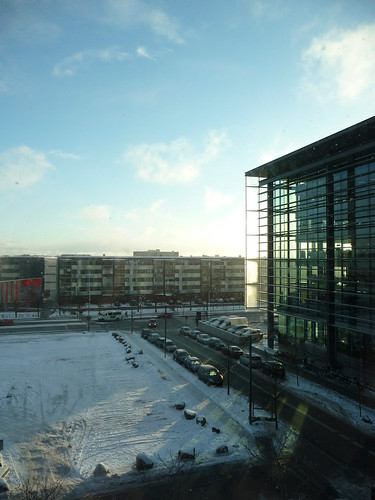
The biking conditions, however, deteriorated badly, and I got to regret forgetting the winter tires in Norway. But the metro - after a bad start the first week-end, quickly got back to running as scheduled.

This being Scandinavia, after all, despite the delay in organising winter clean-up crews (which the Danes claim is equally large each year, and I suspect is deliberate in order to save money). And so the important things were quickly back in place: the bike-lanes got cleared and salted, the sidewalks got closed off (I woke up one morning from the sound of snow and ice crashing to the pavement from the building I live in - yes, walking on the sidewalks can be hazardous to your health) and I realised why the Danes think insulated rubber boots can be fashionable. Not that I don't understand the love of rubber boots, but if it's so cold I need them insulated, it's normally dry, you know. Not so in the city, where things melt and freeze at random, and water tends to accumulate over the frozen drains positioned exactly where you want to cross the road.
So, I had a month away from biking, which I kind of appreciated. I got to learn the routines of the coffee cart outside Danmarks Radio, and I bought more than one cup of coffee out of pity with the poor, frozen people working there in the bitter, windy mornings. I took the metro and walked through a snowy city lit everywhere for Christmas, enjoying a somewhat slower pace. Also, this let me see Copenhagen in a somewhat more friendly light.
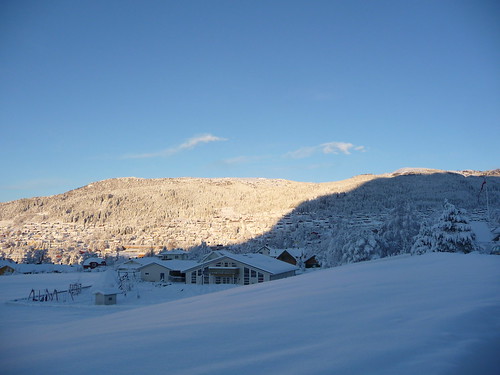
When I got hold of the winter tires after Christmas spent in incredibly beautiful Volda,
I realised that people in Copenhagen sincerely hate bikers. Due to the snow, there's less space for the bicycles than usual, and even with spikes I don't want to ride over large chunks of ice, so I, like everybody else, have less space in which to ride. In the 10 minutes it took me to get from where I had the tires changed and home, I saw more rude honking of horns, was overtaken by more scooters in the bike lanes and heard more yelling than at any other similar trips. Only one of those were directed at me - that from a man only perhaps 10 years older than me (what's with the men, by the way? They are so unpleasant! Just this fall I had gotten through a bikers gate in a fence and up on the sidewalk. I was off my bike and standing still, when this group of men came towards me. I was looking at them, thinking that hmmm, they didn't look half bad, and men my age were actually pretty attractive, when they started telling me I should get back out into the bike lane, and get off the bloody sidewalk. This was of course because me standing there caused them to have to split up in pairs rather than walking 4 men broad, so buhuhu, but you know, it only took them a few seconds to drop from looking like a nice bunch to looking like a pack of sour, bitter old men.) who probably hadn't seen me there on the middle of the sidewalk turning into the narrow opening to the lane I was going up. He came at high speed out of a parking garage, and considered it just to correct me for his lack of attention.
It's an odd tension running under the policy of a green city and the wonderful infrastructure for biking, but I suspect it is caused exactly by that infrastructure. After all, all the bike-lanes and bike parking lots take space which in other cities is devoted to cars. It's as if the people not riding bikes have a mathematic deficit which does not let them compute the question of how many more cars they would have to share the roads with, if each biker was in a car instead.
Anyway, this morning I was back on the bike, and due to winter the bike-lanes are a bit less busy, which causes less aggression among the bikers. There's always a silver lining, and so on.
The biking conditions, however, deteriorated badly, and I got to regret forgetting the winter tires in Norway. But the metro - after a bad start the first week-end, quickly got back to running as scheduled.
This being Scandinavia, after all, despite the delay in organising winter clean-up crews (which the Danes claim is equally large each year, and I suspect is deliberate in order to save money). And so the important things were quickly back in place: the bike-lanes got cleared and salted, the sidewalks got closed off (I woke up one morning from the sound of snow and ice crashing to the pavement from the building I live in - yes, walking on the sidewalks can be hazardous to your health) and I realised why the Danes think insulated rubber boots can be fashionable. Not that I don't understand the love of rubber boots, but if it's so cold I need them insulated, it's normally dry, you know. Not so in the city, where things melt and freeze at random, and water tends to accumulate over the frozen drains positioned exactly where you want to cross the road.
So, I had a month away from biking, which I kind of appreciated. I got to learn the routines of the coffee cart outside Danmarks Radio, and I bought more than one cup of coffee out of pity with the poor, frozen people working there in the bitter, windy mornings. I took the metro and walked through a snowy city lit everywhere for Christmas, enjoying a somewhat slower pace. Also, this let me see Copenhagen in a somewhat more friendly light.
When I got hold of the winter tires after Christmas spent in incredibly beautiful Volda,
I realised that people in Copenhagen sincerely hate bikers. Due to the snow, there's less space for the bicycles than usual, and even with spikes I don't want to ride over large chunks of ice, so I, like everybody else, have less space in which to ride. In the 10 minutes it took me to get from where I had the tires changed and home, I saw more rude honking of horns, was overtaken by more scooters in the bike lanes and heard more yelling than at any other similar trips. Only one of those were directed at me - that from a man only perhaps 10 years older than me (what's with the men, by the way? They are so unpleasant! Just this fall I had gotten through a bikers gate in a fence and up on the sidewalk. I was off my bike and standing still, when this group of men came towards me. I was looking at them, thinking that hmmm, they didn't look half bad, and men my age were actually pretty attractive, when they started telling me I should get back out into the bike lane, and get off the bloody sidewalk. This was of course because me standing there caused them to have to split up in pairs rather than walking 4 men broad, so buhuhu, but you know, it only took them a few seconds to drop from looking like a nice bunch to looking like a pack of sour, bitter old men.) who probably hadn't seen me there on the middle of the sidewalk turning into the narrow opening to the lane I was going up. He came at high speed out of a parking garage, and considered it just to correct me for his lack of attention.
It's an odd tension running under the policy of a green city and the wonderful infrastructure for biking, but I suspect it is caused exactly by that infrastructure. After all, all the bike-lanes and bike parking lots take space which in other cities is devoted to cars. It's as if the people not riding bikes have a mathematic deficit which does not let them compute the question of how many more cars they would have to share the roads with, if each biker was in a car instead.
Anyway, this morning I was back on the bike, and due to winter the bike-lanes are a bit less busy, which causes less aggression among the bikers. There's always a silver lining, and so on.
Thursday, January 06, 2011
Save the world with games
Jane McGonigal claims that online games will save the world:
Much as I love games, and even in the face of my own optimism about how games can lead to positive cultural changes, I have a hard time believing that we can "fix" real life by creating and playing games.
McGonigal is a designer, and so she believes strongly, I suspect, in the power of design. In this talk it comes out as if she believes the world can be re-designed, mainly by using game design features. I think that is scary. Game worlds are tyrannical states, if we ever apply the ruthless simplifications used to create game worlds on society, USSR or Nazi-Germany will be puppy play in comparison. Think 1982, which describes a throughly designed world.
Let me state it clearly, in case my love of games, gamers and gaming makes people think I am ready to swap worlds: No, I don't think living in a game world all the time would be a good thing. I think it would be horribly oppressive, with too few options, too many detailed rules and too strong surveillance and control to be satisfying as anything other than a way to once in a while focus on something simple and relatively easy compared to reality.
Later on she says something which is positively wrong. About four minutes into the talk she claims that when we face failure in real life, we get depressed and become cynical. Then she claims we never have those feelings when playing games. But we do, we do, all the time! And then we do what's so great about gaming: We stop playing! When the game starts to feel like a chore because we just can't beat it, we leave it. She even claims there's no unemployment in World of Warcraft. Tell that to the bored guildies whining about how bored they are and why won't anybody come and play!
The problem with real life isn't that it's not designed like a game. It's that we can't turn it off and go somewhere else when we are unhappy. Games are greate because they are GAMES, they are the place we go to when we need a break from the rest. This means the real world can't be broken. The real world can be horrible, polluted, destroyed, war-ridden, but it is the measuring stick for everything. We only have one planet, and this is not a beta-test. What can be broken are our carefully designed systems. They are what brought the world into the state it's in, for good or bad. Designers, McGonigal, designers who thought they could see how it all connects and then make it better by introducing yet another patch to the system.
This doesn't mean we shouldn't learn from games. Games are after all built on pretty solid knowledge and research into how people act and interact, how we learn, what motivates us and how we pay attention. This is then skillfully adapted to digital environments. But the games are just a new way of putting already existing knowledge to good use.
Take for instant the scholar who has been almost universally adapted by game scholars in the European and American cultures: Mihaly Csikszentmihalyi. His very interesting thoughts and research, which is being oh-so-frequently used to explain why people like games and why games are good, was not really made to explain games. It was made to explain real life, particularly the lives of people who were happy and satisfied with their work and their lives. So: The teories on why games are good were not born within games, but came from what McGonigal calls "real life." What is born in games is nothing which does not exist outside of games. Ingame, we have just removed a lot of the stuff we don't want to relate to from the world outside the arena. Games are real, just limited.
Then McGonigal goes on the show us that the amount of time spent playing World of Warcraft equals the amount of time it took for homo sapiens to evolve, and she uses this as a proof that playing makes us evolve as a species, into something more able to collaborate. Eeeehhhh, well, if you're going to measure evolution that way: How many individuals spent their time evolving during those 5 million years? Let's assume we're talking about perhaps a regular population of one million species (I have no idea how many human ancestors were alive on earth at the same time in this period, perhaps much more, pwerhaps much less). If so, we're talking about 5 million million years of evolution. We really need to play a bit more to get there. And it doesn't really help to say "this is true, I really believe it" after that statement about evolution either. Belief isn't proof, even when preaching to somebody who really wants to believe. I just can't. I keep getting these nasty flashes of cynicism that not even my ardent gaming has cured.
Jane McGonigal's TED talk is funny and interesting, and she's charismatic, good looking and smart. I am however severely disappointed with her lack of a historical perspective both on the research she is trying to apply to her talk and on leisure activities. The thing is: Society has been using games for teaching cooperation, team-work, strategic thinking, ethics, mastery and physical and intellectual development, plus a lot of other virtues depending on the game and the values of the society the games are being played in, since the very beginning. This is the argument for football as well as chess.
And around 11 minutes in came one of my big laughs, and it was shared by the audience. She quotes Edward Castronova in Excodus to the virtual world, and then manages to say: "And he's an economist, and he's rational." Cue audience cracking up. I'll not go ALL the way into that comment, but think about how today's economy is doing, and then consider how rational economists are.
Anyway: Go enjoy McGonigal's talk, but don't leave your skepticism at home. It's by being skeptic, cynical, rational and a bit disrespectful of the motives of people with convictions so strong that they tend towards preaching that we can find the interesting ideas in all the chaos being pitched to us every day.
Much as I love games, and even in the face of my own optimism about how games can lead to positive cultural changes, I have a hard time believing that we can "fix" real life by creating and playing games.
McGonigal is a designer, and so she believes strongly, I suspect, in the power of design. In this talk it comes out as if she believes the world can be re-designed, mainly by using game design features. I think that is scary. Game worlds are tyrannical states, if we ever apply the ruthless simplifications used to create game worlds on society, USSR or Nazi-Germany will be puppy play in comparison. Think 1982, which describes a throughly designed world.
Let me state it clearly, in case my love of games, gamers and gaming makes people think I am ready to swap worlds: No, I don't think living in a game world all the time would be a good thing. I think it would be horribly oppressive, with too few options, too many detailed rules and too strong surveillance and control to be satisfying as anything other than a way to once in a while focus on something simple and relatively easy compared to reality.
Later on she says something which is positively wrong. About four minutes into the talk she claims that when we face failure in real life, we get depressed and become cynical. Then she claims we never have those feelings when playing games. But we do, we do, all the time! And then we do what's so great about gaming: We stop playing! When the game starts to feel like a chore because we just can't beat it, we leave it. She even claims there's no unemployment in World of Warcraft. Tell that to the bored guildies whining about how bored they are and why won't anybody come and play!
The problem with real life isn't that it's not designed like a game. It's that we can't turn it off and go somewhere else when we are unhappy. Games are greate because they are GAMES, they are the place we go to when we need a break from the rest. This means the real world can't be broken. The real world can be horrible, polluted, destroyed, war-ridden, but it is the measuring stick for everything. We only have one planet, and this is not a beta-test. What can be broken are our carefully designed systems. They are what brought the world into the state it's in, for good or bad. Designers, McGonigal, designers who thought they could see how it all connects and then make it better by introducing yet another patch to the system.
This doesn't mean we shouldn't learn from games. Games are after all built on pretty solid knowledge and research into how people act and interact, how we learn, what motivates us and how we pay attention. This is then skillfully adapted to digital environments. But the games are just a new way of putting already existing knowledge to good use.
Take for instant the scholar who has been almost universally adapted by game scholars in the European and American cultures: Mihaly Csikszentmihalyi. His very interesting thoughts and research, which is being oh-so-frequently used to explain why people like games and why games are good, was not really made to explain games. It was made to explain real life, particularly the lives of people who were happy and satisfied with their work and their lives. So: The teories on why games are good were not born within games, but came from what McGonigal calls "real life." What is born in games is nothing which does not exist outside of games. Ingame, we have just removed a lot of the stuff we don't want to relate to from the world outside the arena. Games are real, just limited.
Then McGonigal goes on the show us that the amount of time spent playing World of Warcraft equals the amount of time it took for homo sapiens to evolve, and she uses this as a proof that playing makes us evolve as a species, into something more able to collaborate. Eeeehhhh, well, if you're going to measure evolution that way: How many individuals spent their time evolving during those 5 million years? Let's assume we're talking about perhaps a regular population of one million species (I have no idea how many human ancestors were alive on earth at the same time in this period, perhaps much more, pwerhaps much less). If so, we're talking about 5 million million years of evolution. We really need to play a bit more to get there. And it doesn't really help to say "this is true, I really believe it" after that statement about evolution either. Belief isn't proof, even when preaching to somebody who really wants to believe. I just can't. I keep getting these nasty flashes of cynicism that not even my ardent gaming has cured.
Jane McGonigal's TED talk is funny and interesting, and she's charismatic, good looking and smart. I am however severely disappointed with her lack of a historical perspective both on the research she is trying to apply to her talk and on leisure activities. The thing is: Society has been using games for teaching cooperation, team-work, strategic thinking, ethics, mastery and physical and intellectual development, plus a lot of other virtues depending on the game and the values of the society the games are being played in, since the very beginning. This is the argument for football as well as chess.
And around 11 minutes in came one of my big laughs, and it was shared by the audience. She quotes Edward Castronova in Excodus to the virtual world, and then manages to say: "And he's an economist, and he's rational." Cue audience cracking up. I'll not go ALL the way into that comment, but think about how today's economy is doing, and then consider how rational economists are.
Anyway: Go enjoy McGonigal's talk, but don't leave your skepticism at home. It's by being skeptic, cynical, rational and a bit disrespectful of the motives of people with convictions so strong that they tend towards preaching that we can find the interesting ideas in all the chaos being pitched to us every day.
Tuesday, December 21, 2010
Christmas spirit arrives digitally
This year the feeling of Christmas has been hard to achieve. But on Monday, suddenly, my daughter calls me. "Mom, did your present to your sister get lost?" "My what?" I respond, because I really wasn't thinking about Christmas presents. "It's on the internet, a present for her from you and dad." On the internet? WTF!?! What does the internet have to do with my presents? "A friend just mailed me," the girl continues, "she says that there's a list at posten.no, over lost presents at mail offices, and this one is in Bergen."
So online I go, hurriedly, ignoring my husband's demands to hear what's up, and yes, there it is:
That's definitely my present to my younger sister, and it's fallen out of the envelope I had packed their presents in, at some mail office in Bergen. And so I hit the "send us a tip" button hard, hoping there's somebody at the other end to receive the message about the correct address. But then I start reading about all the other presents, and there's this image before my inner eye, of presents spilling out of bags and boxes, falling out of envelopes, condemned to an unsure fate at the mail offices all over Norway.
However, using the internet, the Norwegian mail has finally found a very sensible, loving use of the net and the social media. Somebody sits down and registers each present, and then you can look through the list, and if you see something you think you know you can tip the mail office, tip the person you think it's for or from, or just spread the message through facebook or twitter. "They sent you a present after all." There's a box of perfume. There's a soft present in star-splattered paper with a self-made snow-ball tag on it. There's something that looks like a book in blue and gold paper, from Maria to Elena. It's at the mail-office, and if you know Maria or Elena, you can help them and make sure their message reaches the destination. I love you. I care about you. I remember you. I took the trouble to find something for you, wrap it and send it, and I really hope it reaches you. And if the traditional channels are not good enough, I really hope somebody helps my message along, because I care, I do.
Merry Christmas!
----
Update: the mail office didn't register the "tips oss" tip, so I called them. After a few minutes I received a call back from a lady who was not at work at the moment, but she was willing to ask her husband, who also worked at the Norwegian mail, to find the present tonight, when he went to work, to make sure to deliver it. Talk about service and friendliness!
So online I go, hurriedly, ignoring my husband's demands to hear what's up, and yes, there it is:
Ikke typisk julegaveinnpakking, blekblått papir med mørkere tegninger av blader ca 12x9cm og ca 2cm tykk gave.Til/fra lappen er hjemmelaget i turkis papir, pyntet med gullfarget sløyfe i stoff.Kloke ord på innsiden av gavelappen
That's definitely my present to my younger sister, and it's fallen out of the envelope I had packed their presents in, at some mail office in Bergen. And so I hit the "send us a tip" button hard, hoping there's somebody at the other end to receive the message about the correct address. But then I start reading about all the other presents, and there's this image before my inner eye, of presents spilling out of bags and boxes, falling out of envelopes, condemned to an unsure fate at the mail offices all over Norway.
However, using the internet, the Norwegian mail has finally found a very sensible, loving use of the net and the social media. Somebody sits down and registers each present, and then you can look through the list, and if you see something you think you know you can tip the mail office, tip the person you think it's for or from, or just spread the message through facebook or twitter. "They sent you a present after all." There's a box of perfume. There's a soft present in star-splattered paper with a self-made snow-ball tag on it. There's something that looks like a book in blue and gold paper, from Maria to Elena. It's at the mail-office, and if you know Maria or Elena, you can help them and make sure their message reaches the destination. I love you. I care about you. I remember you. I took the trouble to find something for you, wrap it and send it, and I really hope it reaches you. And if the traditional channels are not good enough, I really hope somebody helps my message along, because I care, I do.
Merry Christmas!
----
Update: the mail office didn't register the "tips oss" tip, so I called them. After a few minutes I received a call back from a lady who was not at work at the moment, but she was willing to ask her husband, who also worked at the Norwegian mail, to find the present tonight, when he went to work, to make sure to deliver it. Talk about service and friendliness!
Wednesday, December 15, 2010
Philosophy and games
A conference in April, in Greece, the Philosophy of Computer Games. So tempting! Now, do I dare approach philosophy and games again, and do I manage to do so in time for the deadline of February 1st?
Monday, December 06, 2010
The weirdest people
By way of the Danish videnskab.dk, a pointer to an article by Canadians that concludes with how a lot of American research about human behaviour is wrong. Well, it may conclude that European and Asian research is wrong too, but since they haven't really checked that, who knows.
The important thing with this article is how it talks about generalisation. So much of the research done in the United States is done on first year students. This means it's done on a very narrow group of people, with very specific views and cultural background. An example they give is the relationship to death. Americans have, according to the researchers cited at videnskab.dk, a fundamentally different approach to death than Europeans and people in other cultures. The fear of death is much higher, something which influences the entire society.
When I have stayed in the United States I have felt that very clearly: The sense of being in an alien culture. I thought I would find something familiar, due to language and how we all feel we "know" USA, but oh dear, I was so wrong. An English friend who worked out of New York in a highly international firm told me how Americans are more xenophobic than even the Japanese, and how in their line of business they were quite reluctant to hire Americans due to this.
This kind of connects to my thoughts about English as a "lingua franca" for research, something which of course makes it very easy for American research to spread through the world, but put all non-English speaking people at a distinct disadvantage when going in the other direction. It is a mechanisms that helps maintaining the illusion that we are all similar, because we have to learn how to communicate not only in a language Americans can ready, but also through concepts understandable in an English language culture.
An experience which was an eye-opener to me was when I published this article. I had originally used class to describe differences which would create communication problems within a culture, but I was told that I should not use class but ethnicity, because class wasn't really relevant (in the US). I compromised by using gender, which worked, but the experience was quite shocking. I never thought (and still don't think) there can be a culture where class isn't relevant. For instance, I suspect that a lot of ethnic conflict is also a struggle of class, and the strive for acceptance and respect isn't only about skin colour, but also about making a class journey. This is a fundamental paradigm for anybody who have grown up in an academic tradition heavily influenced by marxism, and while I may be wrong, it highlights the differences between Scandinavia and the USA.
On this background "the weirdest people" is a very important contribution to the discussion of western research, and I guess I should go looking to see if there's a library near me with access to Behavioral and Brain Sciences at Cambridge journals.
The important thing with this article is how it talks about generalisation. So much of the research done in the United States is done on first year students. This means it's done on a very narrow group of people, with very specific views and cultural background. An example they give is the relationship to death. Americans have, according to the researchers cited at videnskab.dk, a fundamentally different approach to death than Europeans and people in other cultures. The fear of death is much higher, something which influences the entire society.
When I have stayed in the United States I have felt that very clearly: The sense of being in an alien culture. I thought I would find something familiar, due to language and how we all feel we "know" USA, but oh dear, I was so wrong. An English friend who worked out of New York in a highly international firm told me how Americans are more xenophobic than even the Japanese, and how in their line of business they were quite reluctant to hire Americans due to this.
This kind of connects to my thoughts about English as a "lingua franca" for research, something which of course makes it very easy for American research to spread through the world, but put all non-English speaking people at a distinct disadvantage when going in the other direction. It is a mechanisms that helps maintaining the illusion that we are all similar, because we have to learn how to communicate not only in a language Americans can ready, but also through concepts understandable in an English language culture.
An experience which was an eye-opener to me was when I published this article. I had originally used class to describe differences which would create communication problems within a culture, but I was told that I should not use class but ethnicity, because class wasn't really relevant (in the US). I compromised by using gender, which worked, but the experience was quite shocking. I never thought (and still don't think) there can be a culture where class isn't relevant. For instance, I suspect that a lot of ethnic conflict is also a struggle of class, and the strive for acceptance and respect isn't only about skin colour, but also about making a class journey. This is a fundamental paradigm for anybody who have grown up in an academic tradition heavily influenced by marxism, and while I may be wrong, it highlights the differences between Scandinavia and the USA.
On this background "the weirdest people" is a very important contribution to the discussion of western research, and I guess I should go looking to see if there's a library near me with access to Behavioral and Brain Sciences at Cambridge journals.
Thursday, December 02, 2010
The world falls apart
For those out there who still play WoW, the last few weeks have been some ride, right? With the preparations for Cataclysm, the expansion arriving next week, Azeroth is changing, and I find myself wondering about how much I have relied on the stability of the game world.
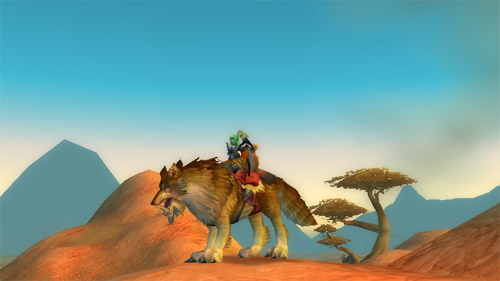
This week-end I took my original game character and rode around Durotar and the Barrens, her starting area. It was shocking. Where I had quested as a newbie, where I knew every nook and cranny, every quest and bug, it was all different. A huge rift split the land. The Alliance (ouch, that hurt) has several more strongholds in Southern Barrens, and the orcs have been pushed back into the mountainsides. Stonetalon Mountains is the site of fierce battles between gnome and goblin technology, Ashenvale is being stripped by gnomes and orcs working together, Thousand Needles is almost gone, and Feralas has large human and elf settlements. Azshara is a low-level goblin zone - I remember grinding bloodelves for cloth and gold when saving for my first fast mount - and Tanaris has a lot of new beaches. I find the changes hurt me in a way not too dissimilar from when they built a road right over my favourite mushroom place in Ørsta. It's not like I was hanging out in that spot much except when I looked for mushroom, but I always knew it was there.
Now, it's gone, like the great lift into Thousand Needles.
It's cool though, in a way losing the mushroom patch was not. It has made me drag out the low level characters I haven't bothered level, and re-explore with the sense of risk and adventure I felt way back then, more than five years ago. It's beautiful and different and terrifying, and I feel like a newbie, disoriented and frustrated and happy at the same time. The sensation of something being at stake is back. So far, I love it.
This week-end I took my original game character and rode around Durotar and the Barrens, her starting area. It was shocking. Where I had quested as a newbie, where I knew every nook and cranny, every quest and bug, it was all different. A huge rift split the land. The Alliance (ouch, that hurt) has several more strongholds in Southern Barrens, and the orcs have been pushed back into the mountainsides. Stonetalon Mountains is the site of fierce battles between gnome and goblin technology, Ashenvale is being stripped by gnomes and orcs working together, Thousand Needles is almost gone, and Feralas has large human and elf settlements. Azshara is a low-level goblin zone - I remember grinding bloodelves for cloth and gold when saving for my first fast mount - and Tanaris has a lot of new beaches. I find the changes hurt me in a way not too dissimilar from when they built a road right over my favourite mushroom place in Ørsta. It's not like I was hanging out in that spot much except when I looked for mushroom, but I always knew it was there.
Now, it's gone, like the great lift into Thousand Needles.
It's cool though, in a way losing the mushroom patch was not. It has made me drag out the low level characters I haven't bothered level, and re-explore with the sense of risk and adventure I felt way back then, more than five years ago. It's beautiful and different and terrifying, and I feel like a newbie, disoriented and frustrated and happy at the same time. The sensation of something being at stake is back. So far, I love it.
Wednesday, December 01, 2010
Christmas present tips for your geeky friend
I know what I want, at least: A very special memory stick! And if it's a girl geek and you want to say "I love you" in a suitably romantic way...
Or, if she's an academic geek, and happen to be exactly like me, then she wants to try out new software, or needs a new version of the old. Trust me, nothing says "I love you" like knowing exactly what software your favourite geek girl needs. Or do you want to impress? Go for something expensive!
Or, if she's an academic geek, and happen to be exactly like me, then she wants to try out new software, or needs a new version of the old. Trust me, nothing says "I love you" like knowing exactly what software your favourite geek girl needs. Or do you want to impress? Go for something expensive!
Pink bloggers
One of the most popular Norwegian girl bloggers at the moment is a young lady who calls herself Linnea, and writes the blog "All you know is wrong" (Alt du vet er feil). At first glance you expect to encounter a typical fashion blog, as the top picture is of a very good looking girl with nice earrings, a fashionable top and a cheeky smile. The "About me" section gives a warning though, as she writes:
Then you start reading, and you realise that this is not your average fashion blogger. Linnea writes a wonderful stream-of-consciousness type posts, all about herself, her experiences, feelings and, yes, clothes. Where your average fashion blogger would show herself off in handsome clothes, Linnea posts a picture of herself, on the floor of a gym, the result of a fall because she was just slipped going down one step. Not only did she fall, most ungraciously, she did so while wearing a thermo-suit, which is standard winter workwear for anybody working outside. So, not your standard fashionable one-piece; it's utility clothing for the most unfashionable (but extremely important) jobs.
This particular post, titled "I don't know," discusses exactly her position as a blogger, and particularly a "pink" blogger. She is outraged at being characterised as a pink blogger, and I can very well understand that. Her writing is sometimes as delicate as if she had puked all over the screen, as her stream-of-consciousness often appears to not have been subject to any editing at all. There's nothing polite, sweet or candy-scented in her texts, and pink is definitely not a colour that comes to mind.
What this random, meandering and carefully not-edited post still manages to say is: "Look, I am not cute or graceful or strong or smart, and I am still the most popular and potentially influental blogger in Norway." And I have to say: I can see why. Linnea is the girl who doesn't have a grip, her closet is a mess, her life is filled with inner conflict and struggle, and she is intolerant and angry - your normal, average girl, who happens to be able to write and use a mobile camera. She speaks for the bitch in all girls who are sick of trying to blend and be gracious, and she reveals her total lack of taste quite ruthlessly.
If Linnea has a colour to her blog, I think it's orange. It's warm and angry and temperamental and contrary, and it picks you up and makes you feel cheery, even if it's obnoxious and hard to tolerate in too large doses.
Jeg er over gjennomsnittet bitter, og liker stort sett ingen andre enn meg selv. OBS: Man lærer ingenting her inne.Translated: I am more than averagely bitter, and don't like anybody but myself. Note: You learn nothing here.
Then you start reading, and you realise that this is not your average fashion blogger. Linnea writes a wonderful stream-of-consciousness type posts, all about herself, her experiences, feelings and, yes, clothes. Where your average fashion blogger would show herself off in handsome clothes, Linnea posts a picture of herself, on the floor of a gym, the result of a fall because she was just slipped going down one step. Not only did she fall, most ungraciously, she did so while wearing a thermo-suit, which is standard winter workwear for anybody working outside. So, not your standard fashionable one-piece; it's utility clothing for the most unfashionable (but extremely important) jobs.
This particular post, titled "I don't know," discusses exactly her position as a blogger, and particularly a "pink" blogger. She is outraged at being characterised as a pink blogger, and I can very well understand that. Her writing is sometimes as delicate as if she had puked all over the screen, as her stream-of-consciousness often appears to not have been subject to any editing at all. There's nothing polite, sweet or candy-scented in her texts, and pink is definitely not a colour that comes to mind.
What this random, meandering and carefully not-edited post still manages to say is: "Look, I am not cute or graceful or strong or smart, and I am still the most popular and potentially influental blogger in Norway." And I have to say: I can see why. Linnea is the girl who doesn't have a grip, her closet is a mess, her life is filled with inner conflict and struggle, and she is intolerant and angry - your normal, average girl, who happens to be able to write and use a mobile camera. She speaks for the bitch in all girls who are sick of trying to blend and be gracious, and she reveals her total lack of taste quite ruthlessly.
If Linnea has a colour to her blog, I think it's orange. It's warm and angry and temperamental and contrary, and it picks you up and makes you feel cheery, even if it's obnoxious and hard to tolerate in too large doses.
Monday, November 22, 2010
Blogging - is it journalism?
Accidentally, as I was following up on other topics, I found that there is a wonderful drama playing out in the Norwegian blogosphere, complete with a sobbing bride, nasty, greybearded men and a handsome football-player. OK, the football-player has very little to do with it, but he's a very good-looking accessory.
So, what happened here?
A young and beautiful woman works part-time as a journalist in an online paper, and is fashion editor and co-owner of an online magasine. At the same time she is making money on her fashion/lifestyle weblog: Fotballfrue - football wife (yeah, that's where the handsome man comes in).
So, somebody reads that she has income from a lot of different sources, and they question her ethics (and they do it while she is on a honeymoon, how rude!) in an article about fashion weblogs.
There are a lot of bloggers who have very high hit numbers, and use this commercially. Fashion blogging is "in" at the moment, and so the companies pay the young and the beautiful to let others know what they wear and use. The principle is nothing new, it's pretty much the same as sponsoring skaters while they were the "cool", or athletes, for that matter. Ohh, again, almost a reference to the handsome husband who never really enters the story!
Anyway: Some fashion bloggers do it to make money, some do it to create a name for themselves, to build their street cred. However, being a good fashion blogger takes a lot of money, in order to keep up their fresh front they need to be seen in the most interesting, newes and fanciest outfits available - and what is better than getting paid to do this, alternatively getting the products directly and free from the producers?
So far so good. But what if you are trying to build not just street cred, but actually become a journalist and an editor of a magasine? What should the smart fashion blogger do? Oh, and by the way, "journalist" isn't a title you get by getting an education and a license, like "medical doctor" or "lawyer," it's something you become if you practice journalism. So if you don't practice journalism, you are not a journalist, no matter how much education you have.
The whole issue with the football wife isn't really that she writes on order for companies. The issue is that she at the same time calls herself a journalist and an editor. She acts as a marketing officer, without making that obvious in the different posts, while also trying to build the trust and reputation she needs in order to be taken seriously as a journalist. And when she is criticised she claims that blogging isn't journalism, and so she can do what she likes.
She is, in a way, right. On "fotballfrue" she is her own editor, owner and writer. As long as she doesn't harass anybody, she can write what she likes. If her business strategy is to promote objects or trends for whoever pays her (are those fake louboutins, or real?) then she can do that to her heart's content on her blog. She will gain a lot of treet cred among other fashion bloggers, and probably among her followers as well. And she is right, her blog isn't journalism.
Does that mean blogging isn't journalism? No, because if she wrote according to the standards of journalism, her blog would be journalism. Again, journalism is a practice, not a license or a stamp put on only some organisations.
Back to the drama.
The pretty young lady is a part-time stand-in for Side2.no. So she is, at best, part-time freelancing as a journalist. It's not really anybody's business how she spends her time when she's not working for them, and Side2.no can stop using her when ever they like.
And that's what really should come out of this story: she doesn't have a job, she has a pretty face, a fashion blog, and ambitions to become an editor. In a case like that, what is the smart strategy?
I find myself firmly on the side of the grey-bearded evil, which isn't so odd, since I am turning pretty grey as well. She should clean up her blogging act, and stop selling her opinions to the highest bidder. People who write commercials for pay are not welcome in the journalism union in Norway, and when journalists change jobs and go into marketing, they need to swap unions. It's how it goes. If she wants to go that way, she needs to adjust to the standards, or she will have no journalistic credibility.
However... she might not want or need it. She's young, she's pretty, and people are paying her to wear beautiful clothes. Why should she worry about journalism? But then I'd recommend that she removes the "journalist" title from her webpage. If you don't practice journalism, you aren't a journalist. If you claim you are, you will be criticised. I am sorry, really, and it's horrible that people are letting you know this while you're on your honey-moon, but that's how it is.
Oh, and have a wonderful time. Your life looks like a slice of marketing heaven.
----
Corrected due to Undre's comment, thanks.
So, what happened here?
A young and beautiful woman works part-time as a journalist in an online paper, and is fashion editor and co-owner of an online magasine. At the same time she is making money on her fashion/lifestyle weblog: Fotballfrue - football wife (yeah, that's where the handsome man comes in).
So, somebody reads that she has income from a lot of different sources, and they question her ethics (and they do it while she is on a honeymoon, how rude!) in an article about fashion weblogs.
There are a lot of bloggers who have very high hit numbers, and use this commercially. Fashion blogging is "in" at the moment, and so the companies pay the young and the beautiful to let others know what they wear and use. The principle is nothing new, it's pretty much the same as sponsoring skaters while they were the "cool", or athletes, for that matter. Ohh, again, almost a reference to the handsome husband who never really enters the story!
Anyway: Some fashion bloggers do it to make money, some do it to create a name for themselves, to build their street cred. However, being a good fashion blogger takes a lot of money, in order to keep up their fresh front they need to be seen in the most interesting, newes and fanciest outfits available - and what is better than getting paid to do this, alternatively getting the products directly and free from the producers?
So far so good. But what if you are trying to build not just street cred, but actually become a journalist and an editor of a magasine? What should the smart fashion blogger do? Oh, and by the way, "journalist" isn't a title you get by getting an education and a license, like "medical doctor" or "lawyer," it's something you become if you practice journalism. So if you don't practice journalism, you are not a journalist, no matter how much education you have.
The whole issue with the football wife isn't really that she writes on order for companies. The issue is that she at the same time calls herself a journalist and an editor. She acts as a marketing officer, without making that obvious in the different posts, while also trying to build the trust and reputation she needs in order to be taken seriously as a journalist. And when she is criticised she claims that blogging isn't journalism, and so she can do what she likes.
She is, in a way, right. On "fotballfrue" she is her own editor, owner and writer. As long as she doesn't harass anybody, she can write what she likes. If her business strategy is to promote objects or trends for whoever pays her (are those fake louboutins, or real?) then she can do that to her heart's content on her blog. She will gain a lot of treet cred among other fashion bloggers, and probably among her followers as well. And she is right, her blog isn't journalism.
Does that mean blogging isn't journalism? No, because if she wrote according to the standards of journalism, her blog would be journalism. Again, journalism is a practice, not a license or a stamp put on only some organisations.
Back to the drama.
The pretty young lady is a part-time stand-in for Side2.no. So she is, at best, part-time freelancing as a journalist. It's not really anybody's business how she spends her time when she's not working for them, and Side2.no can stop using her when ever they like.
And that's what really should come out of this story: she doesn't have a job, she has a pretty face, a fashion blog, and ambitions to become an editor. In a case like that, what is the smart strategy?
I find myself firmly on the side of the grey-bearded evil, which isn't so odd, since I am turning pretty grey as well. She should clean up her blogging act, and stop selling her opinions to the highest bidder. People who write commercials for pay are not welcome in the journalism union in Norway, and when journalists change jobs and go into marketing, they need to swap unions. It's how it goes. If she wants to go that way, she needs to adjust to the standards, or she will have no journalistic credibility.
However... she might not want or need it. She's young, she's pretty, and people are paying her to wear beautiful clothes. Why should she worry about journalism? But then I'd recommend that she removes the "journalist" title from her webpage. If you don't practice journalism, you aren't a journalist. If you claim you are, you will be criticised. I am sorry, really, and it's horrible that people are letting you know this while you're on your honey-moon, but that's how it is.
Oh, and have a wonderful time. Your life looks like a slice of marketing heaven.
----
Corrected due to Undre's comment, thanks.
Friday, November 19, 2010
Thinking in your first language
This was supposed to be a post about cheating, and ghost-writing academic articles. However, Lisbeth connected it to educational language politics, and that started this. Read at your own peril - it's all about language and education from somebody who only knows half of it.
When ever I spend a lot of time away from Norway, my language suffers. Three - four weeks into a long stay in an English language country, and I forget all language. I am unable to formulate thoughts and ideas, numbed by the constant translation that takes place in my head, even if I do think in the language I speak. I am suffering a version of this here in Denmark, not as harsh, but more subtle and exhausting, as the constant translations in my head are concerned with subtle details. The only cure is to immerse myself, for a while, in Norwegian, to soak up the words, the music of the dialects, the structure of the sentences. I need to find the voice of my original thoughts in order to find a voice at all.
When I had this experience the first time, I never connected it to the language conflicts which gave birth to nynorsk - new Norwegian - or the political struggle for first language classes for non-Norwegian-speakers in school. But then I discovered a pattern: How not hearing or speaking my own language exhausts me, numbs me and slows me down. It doesn't replace one language with another, it takes away all languages, and I struggle in my search for words.
I guess you are now not surprised the to learn that no, I don't think there should be a lingua franca which all academics should use, from school-children up to professors. I also don't think we should force all students to write all their work in for instance English, just because it will make it easier for an American scholar to read their papers.
This doesn't mean I think we should stop communicating. I am truely grateful that I can talk to Italians, Portuguese, Koreans, Turkish, French and Finns without me having to learn 6 more languages. I'd love to, but I'd need some serious state grants to support the learning period. What I mean is that in order to be able to use our energy on thinking, language needs to take the back seat. We shouldn't insist that our students constantly struggle with words when what we want them to struggle with to be ideas, concepts, theories, hypothesis and arguments. It is enough, really. After all, if they, like me, were born to a social strata where higher education was a far away dream, not an everyday chore, then learning to be an academic is a whole new language in itself.
I would like to see two directions for language in education. First, I would like to see the language education in general strenghtened, and with it culture and literature. People who speak more than one language fluently are more empathic, think quicker, assimilate knowledge faster and in general appear to have more flexible minds. So that's a resounding yes for more emphasis on languages. However, I'd like education to contain more than two languages. We should learn to speak and regularly be encouraged to practice 3 or four languages. Why? Because if we can listen to how another person speaks in their own language, we will meet them as very different persons.
When we study, we should be allowed to learn in our own language, learn to have discourse within our own culture. With a base in the mother tongue, we should then challenge others, stretching ourselves in order to learn not only mastery of another academic tradition of discourse, but also respect for it, for the difficulties others need to overcome in order to communicate with us. It is hard to be a foreign student. It is hard to be an academic from a small country, forced to publish and cooperate internationally. But we should focus on the benefits to be had by learning not just one or two languages, so we can get by, but several: opening the world to us in a very different way.
If internationalisation is to get anywhere, we need to teach how to communicate. Even today, that means in more than one language - but it also means honouring our own while we do it.
When ever I spend a lot of time away from Norway, my language suffers. Three - four weeks into a long stay in an English language country, and I forget all language. I am unable to formulate thoughts and ideas, numbed by the constant translation that takes place in my head, even if I do think in the language I speak. I am suffering a version of this here in Denmark, not as harsh, but more subtle and exhausting, as the constant translations in my head are concerned with subtle details. The only cure is to immerse myself, for a while, in Norwegian, to soak up the words, the music of the dialects, the structure of the sentences. I need to find the voice of my original thoughts in order to find a voice at all.
When I had this experience the first time, I never connected it to the language conflicts which gave birth to nynorsk - new Norwegian - or the political struggle for first language classes for non-Norwegian-speakers in school. But then I discovered a pattern: How not hearing or speaking my own language exhausts me, numbs me and slows me down. It doesn't replace one language with another, it takes away all languages, and I struggle in my search for words.
I guess you are now not surprised the to learn that no, I don't think there should be a lingua franca which all academics should use, from school-children up to professors. I also don't think we should force all students to write all their work in for instance English, just because it will make it easier for an American scholar to read their papers.
This doesn't mean I think we should stop communicating. I am truely grateful that I can talk to Italians, Portuguese, Koreans, Turkish, French and Finns without me having to learn 6 more languages. I'd love to, but I'd need some serious state grants to support the learning period. What I mean is that in order to be able to use our energy on thinking, language needs to take the back seat. We shouldn't insist that our students constantly struggle with words when what we want them to struggle with to be ideas, concepts, theories, hypothesis and arguments. It is enough, really. After all, if they, like me, were born to a social strata where higher education was a far away dream, not an everyday chore, then learning to be an academic is a whole new language in itself.
I would like to see two directions for language in education. First, I would like to see the language education in general strenghtened, and with it culture and literature. People who speak more than one language fluently are more empathic, think quicker, assimilate knowledge faster and in general appear to have more flexible minds. So that's a resounding yes for more emphasis on languages. However, I'd like education to contain more than two languages. We should learn to speak and regularly be encouraged to practice 3 or four languages. Why? Because if we can listen to how another person speaks in their own language, we will meet them as very different persons.
When we study, we should be allowed to learn in our own language, learn to have discourse within our own culture. With a base in the mother tongue, we should then challenge others, stretching ourselves in order to learn not only mastery of another academic tradition of discourse, but also respect for it, for the difficulties others need to overcome in order to communicate with us. It is hard to be a foreign student. It is hard to be an academic from a small country, forced to publish and cooperate internationally. But we should focus on the benefits to be had by learning not just one or two languages, so we can get by, but several: opening the world to us in a very different way.
If internationalisation is to get anywhere, we need to teach how to communicate. Even today, that means in more than one language - but it also means honouring our own while we do it.
Tuesday, November 16, 2010
IR 11.0 is over - thanks all
There should have been some kind of face-to-face debrief after IR 11.0, and I will at some point in the not too far future write the AOIR board with what I think they need to know (functionality of the conference organising system f.ex.,) but for now I'll just take it here.
As some noticed, I was extremely ambivalent on facebook before I went to Gothenburg. I was ambivalent in real life as well. Although some felt that there was good reason to criticize the decisions I had made about the schedule and the responses they got to their requests before the conference, neither decisions nor responses were based on lack of consideration. I had a certain number of rooms, a certain number of contributions, and a certain number of hours, and I had to make all of that sum up to a functional conference. However, the scheduling, gruelling work that it was, was just the tip of the iceberg. It covered the last 4 months of a one-year effort, an effort that started in October 2009.
This conference removed that already elusive concept "spare time," and even cut into the sacred raiding time. Rather than settling to blog, play with photos, write friends or chat, when I picked up the computer I'd start responding to emails or work on some conference detail. I am not whining. You see - I liked that. I got to write a lot of people I have not seen for years, people I have only read (about) and some total strangers who turned out to be extremely interesting scholars. What's not to like!
However, I did get tired. The last weeks before the conference I just had to give up on raiding all together, because with teaching and administration and the conference, I was working 10-12 hour days. Not quite that long weekends, but still, it's not like I followed regulations. And so, as the conference approached I dreaded it more and more, as the workload just kept increasing.
Then it started.
Most things went right. Some went wrong, and nobody could have done anything about it. (I am still really sad about Jon Bing being ill though. I think that was the biggest low of the conference.) Some were fixed before they went really wrong. But most of all, I loved the fact that people were happy there. The compact conference site, the excellent food and the work people put into their presentations and their research - as well as into each other - made it all work out surprisingly well. And the feedback afterwards still warms me, even if I was so spent at the banquet I couldn't even say thank you politely.
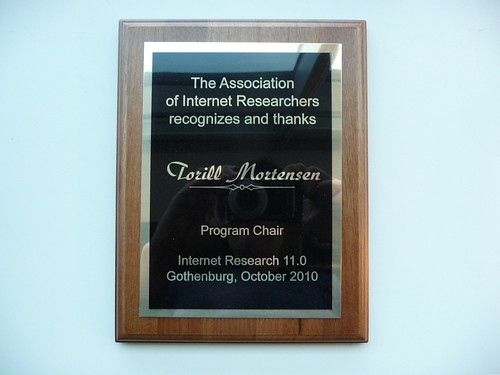
I am still proud of this plaque though, although I really don't know where to put it or how to deal with actually owning it. Makes for a fun conversation piece, and yes, it does warm, along with the praise on the aoir list and the twitter stream, now that I have realised the conference was a success!
As some noticed, I was extremely ambivalent on facebook before I went to Gothenburg. I was ambivalent in real life as well. Although some felt that there was good reason to criticize the decisions I had made about the schedule and the responses they got to their requests before the conference, neither decisions nor responses were based on lack of consideration. I had a certain number of rooms, a certain number of contributions, and a certain number of hours, and I had to make all of that sum up to a functional conference. However, the scheduling, gruelling work that it was, was just the tip of the iceberg. It covered the last 4 months of a one-year effort, an effort that started in October 2009.
This conference removed that already elusive concept "spare time," and even cut into the sacred raiding time. Rather than settling to blog, play with photos, write friends or chat, when I picked up the computer I'd start responding to emails or work on some conference detail. I am not whining. You see - I liked that. I got to write a lot of people I have not seen for years, people I have only read (about) and some total strangers who turned out to be extremely interesting scholars. What's not to like!
However, I did get tired. The last weeks before the conference I just had to give up on raiding all together, because with teaching and administration and the conference, I was working 10-12 hour days. Not quite that long weekends, but still, it's not like I followed regulations. And so, as the conference approached I dreaded it more and more, as the workload just kept increasing.
Then it started.
Most things went right. Some went wrong, and nobody could have done anything about it. (I am still really sad about Jon Bing being ill though. I think that was the biggest low of the conference.) Some were fixed before they went really wrong. But most of all, I loved the fact that people were happy there. The compact conference site, the excellent food and the work people put into their presentations and their research - as well as into each other - made it all work out surprisingly well. And the feedback afterwards still warms me, even if I was so spent at the banquet I couldn't even say thank you politely.
I am still proud of this plaque though, although I really don't know where to put it or how to deal with actually owning it. Makes for a fun conversation piece, and yes, it does warm, along with the praise on the aoir list and the twitter stream, now that I have realised the conference was a success!
Sunday, October 17, 2010
Copenhagen part 4: bikes revisited
Today about flow and control.
There's something intensely satisfying about using the bike to get around. While biker weblogs in Copenhagen worry that Danish children don't learn to play with and enjoy bicycles, I am rediscovering the sense of freedom I used to feel as a teen-ager, the agency and control the bicycle gave me.
My first bike was stolen though, and it was years until I had another bicycle of my own: at high-school I bought a Raleigh racing bike that gave me a sense of flying, as I zoomed past the cars stuck on the road into Ålesund every morning in the seventies. I used that bike for years, and I also used it to ride almost to the railway station. Now, that may not sound like such an achievement, but where I grew up that was a 2-300 kilometer ride, included crossing at least one mountain, and at the time also came with bonus sleet, the terror of brakes failing in a frozen, wet downhill trek with a heavily loaded bike, and nowhere to sleep over when I reached my destination.
Imagine my delight today, when I rode down to the railway station, zooming through the sunny, quiet Copenhagen Sunday streets, to buy tickets for the IR 11.0 conference.
Now, a regular morning or afternoon in rush traffic, biking isn't all that easy. I am learning the trick to it, and the number of rude comments yelled at me are slowly growing less, but I still have to focus. Even experienced Danes have to focus, as proven by the encounters I witness: bikers almost getting into fights as they ride side by side, disagreeing about some move that happened behind me before the two (normally male) push past me in angry competition - just to have to stand still and ignore each other at the next red light. And sometimes my biking colleagues come into the office, all shook up, talking about how they were hit - several times - by other cyclists, in the 20 minute ride through morning traffic.
Copenhagen bikers come fast and ride with intent. But on a sunny Sunday, the air crisp and clear and the sun low, throwing the glare off the water into my eyes, biking in Copenhagen is just the right balance between challenge and mastery. I own the streets. I make clever rounds in order to get at the place I want to go in the best manner, and I smile secretly at other bikers as we move smoothly from being on a vehicle to being pedestrians. We have all the options, and then some. And so I make an extra loop around the block, to come from just the right angle into the back yard, and I roll into place with a wide grin plastered all over my face. The act of biking is putting me in a flow state of mind, where I could go on and on, exploring Copenhagen just because I can.
There's something intensely satisfying about using the bike to get around. While biker weblogs in Copenhagen worry that Danish children don't learn to play with and enjoy bicycles, I am rediscovering the sense of freedom I used to feel as a teen-ager, the agency and control the bicycle gave me.
My first bike was stolen though, and it was years until I had another bicycle of my own: at high-school I bought a Raleigh racing bike that gave me a sense of flying, as I zoomed past the cars stuck on the road into Ålesund every morning in the seventies. I used that bike for years, and I also used it to ride almost to the railway station. Now, that may not sound like such an achievement, but where I grew up that was a 2-300 kilometer ride, included crossing at least one mountain, and at the time also came with bonus sleet, the terror of brakes failing in a frozen, wet downhill trek with a heavily loaded bike, and nowhere to sleep over when I reached my destination.
Imagine my delight today, when I rode down to the railway station, zooming through the sunny, quiet Copenhagen Sunday streets, to buy tickets for the IR 11.0 conference.
Now, a regular morning or afternoon in rush traffic, biking isn't all that easy. I am learning the trick to it, and the number of rude comments yelled at me are slowly growing less, but I still have to focus. Even experienced Danes have to focus, as proven by the encounters I witness: bikers almost getting into fights as they ride side by side, disagreeing about some move that happened behind me before the two (normally male) push past me in angry competition - just to have to stand still and ignore each other at the next red light. And sometimes my biking colleagues come into the office, all shook up, talking about how they were hit - several times - by other cyclists, in the 20 minute ride through morning traffic.
Copenhagen bikers come fast and ride with intent. But on a sunny Sunday, the air crisp and clear and the sun low, throwing the glare off the water into my eyes, biking in Copenhagen is just the right balance between challenge and mastery. I own the streets. I make clever rounds in order to get at the place I want to go in the best manner, and I smile secretly at other bikers as we move smoothly from being on a vehicle to being pedestrians. We have all the options, and then some. And so I make an extra loop around the block, to come from just the right angle into the back yard, and I roll into place with a wide grin plastered all over my face. The act of biking is putting me in a flow state of mind, where I could go on and on, exploring Copenhagen just because I can.
Wednesday, October 13, 2010
Copenhagen part 3: Advertising
I have watched way too much TV the last few days. The literal pain in my neck has done anything else absolutely unbearable. This means I have found myself mindlessly watching more than a few ads.
Before I left Norway, my husband noted that the trend was towards stupid men. Here, the trend is towards unreasonable, idiotic, furiously raging women. There's particularly this one television channel that annoys me at the moment, YouSee. What happens is: He, friendly, relaxed and reasonable, comes into the room, and she goes into attack mode immediately. She tells him her favourite sex in the city episode is on, and no way is she missing that rerun just so he can watch the match he has been waiting for all year. He just smiles, nods and grabs his computer. She keeps yelling, angry and obviously after a fight, but he just smiles and agrees and goes into the next room, turning on the computer. Of course, he has broadband from YouSee, and so he can get to watch all the matches he wants, without having to fight with her over it.
There are more of these, such as an ad for beer, where the women go crazy over a lovely walk-in closet in the new home of the hostess, pointing out details such as shoe-racks and large mirrors. This is all done in slightly hysterical, whiny squeals of delight. Then we hear a deep, full roar of happiness, and we see where the men have ended up in their tour of the house. They have found the important closet: the walk-in cooler for beer, where they express their delight in a manly manner, the anti-thesis to the materialistic exstacy of the squealing women.
And another: he has installed video on demand, so when she shows up with large bags full of delicacies, ready to settle down for a romantic night with dinner, a movie and some nice wine, he hasn't rented the movie he should. Instead he keeps telling her "video on demand", while she goes crazy and yells at him and walks out without him getting more than a constant repetition of those words in. He shrugs, and settles to watch the movie. Now, I am not sure who is more stupid here, he COULD have said: I have the movie, darling, I just have to put in the right codes on the TV, and we'll have a lovely evening. Instead he stands there repeating three words which obviously means nothing to her. But that's because he's so clever and "in" on what goes on, and she's a technological moron.
Somehow, I don't feel like buying YouSee, beer, or video on demand after watching those ads. I just watch the Danish Radio Culture channel (DR-K) instead. They have some extremely interesting programs on art, and artist portraits. And, most important, no ads.
Before I left Norway, my husband noted that the trend was towards stupid men. Here, the trend is towards unreasonable, idiotic, furiously raging women. There's particularly this one television channel that annoys me at the moment, YouSee. What happens is: He, friendly, relaxed and reasonable, comes into the room, and she goes into attack mode immediately. She tells him her favourite sex in the city episode is on, and no way is she missing that rerun just so he can watch the match he has been waiting for all year. He just smiles, nods and grabs his computer. She keeps yelling, angry and obviously after a fight, but he just smiles and agrees and goes into the next room, turning on the computer. Of course, he has broadband from YouSee, and so he can get to watch all the matches he wants, without having to fight with her over it.
There are more of these, such as an ad for beer, where the women go crazy over a lovely walk-in closet in the new home of the hostess, pointing out details such as shoe-racks and large mirrors. This is all done in slightly hysterical, whiny squeals of delight. Then we hear a deep, full roar of happiness, and we see where the men have ended up in their tour of the house. They have found the important closet: the walk-in cooler for beer, where they express their delight in a manly manner, the anti-thesis to the materialistic exstacy of the squealing women.
And another: he has installed video on demand, so when she shows up with large bags full of delicacies, ready to settle down for a romantic night with dinner, a movie and some nice wine, he hasn't rented the movie he should. Instead he keeps telling her "video on demand", while she goes crazy and yells at him and walks out without him getting more than a constant repetition of those words in. He shrugs, and settles to watch the movie. Now, I am not sure who is more stupid here, he COULD have said: I have the movie, darling, I just have to put in the right codes on the TV, and we'll have a lovely evening. Instead he stands there repeating three words which obviously means nothing to her. But that's because he's so clever and "in" on what goes on, and she's a technological moron.
Somehow, I don't feel like buying YouSee, beer, or video on demand after watching those ads. I just watch the Danish Radio Culture channel (DR-K) instead. They have some extremely interesting programs on art, and artist portraits. And, most important, no ads.
Tuesday, October 05, 2010
Computer games in the libraries
A very short, but very nice, press release, notifies the public that the Norwegian government suggests in the budget for 2011 to put aside 2 million Norwegian krone to buy games for libraries. "Innkjøpsordningen" is the system that secures a certain number of copies sold to public libraries of all books published from certain publishers (I don't know if self-published books count.) This will now be increased with a sum earmarked for games.
Two million krone isn't that much, but there aren't that many Norwegian language games out there. However, the most interesting part of the release was this:
Quick and dirty translation: "Computer games have become a central cultural expression and an important part particularly of the culture- and media everyday life of children and young people. The market is currently dominated by foreign games. There's a need to secure access to alternative productions with Norwegian language and content."
After years of repeating this almost every time I get asked why I think games are important and deserving of research and attention, it feels very good to see it in a public press release, as the reason for such a very sensible proposal.
And thanks to Pål, who knew I'd be very happy to see that press release!
Two million krone isn't that much, but there aren't that many Norwegian language games out there. However, the most interesting part of the release was this:
Dataspill har blitt et sentralt kulturuttrykk og er en viktig del av særlig barn og unges kultur- og mediehverdag. Markedet domineres i dag av utenlandske spill. Det er derfor behov for å sikre barn og unge tilgang til alternative produksjoner med norsk språk og innhold.
Quick and dirty translation: "Computer games have become a central cultural expression and an important part particularly of the culture- and media everyday life of children and young people. The market is currently dominated by foreign games. There's a need to secure access to alternative productions with Norwegian language and content."
After years of repeating this almost every time I get asked why I think games are important and deserving of research and attention, it feels very good to see it in a public press release, as the reason for such a very sensible proposal.
And thanks to Pål, who knew I'd be very happy to see that press release!
Tuesday, September 28, 2010
IR 11.0 program update
I am stuck in an EU ICT conference in Brüssels, which, ironically, offers an outrageously bad internet connection both at the conference center and at the hotel. This means that I can not respond to the many email I keep getting about the conference program.
The program is as finished as I can make it until I know more about who are withdrawing from the conference. This draft should have been published last week. This is the responsibility of the local chairs. I can not help you on that regard, and I am as eager to have this published as you are to see it.
All I can say is: This draft of the program should have been made public last week, and as far as I know it will be, any second.
The program is as finished as I can make it until I know more about who are withdrawing from the conference. This draft should have been published last week. This is the responsibility of the local chairs. I can not help you on that regard, and I am as eager to have this published as you are to see it.
All I can say is: This draft of the program should have been made public last week, and as far as I know it will be, any second.
Friday, September 24, 2010
Blame the woman
I am currently stuck at Kastrup, waiting on a flight to Paris which is already severely delayed. Now, this is no fun, but some people just can't take it. The lady informing the passengers was still delivering her message as a man stormed up to her and started telling her off. Another employee of Norwegian, the airline, told him they were really sorry, and the man backed off for a moment. 20 seconds later, he ran back, and started yelling about the crappy service, and how he never got an apology from Norwegian. The male Norwegian employee offered very polite apologies on behalf of the company. The complaining man brushed him off with: "I am not talking to you!" to keep yelling at the female.
What was that? It's not like they had different jobs, it just happened to be the woman on the loudspeaker, not the guy.
Having too much time to think about it, I have realised it's simple. It's a matter of "blame the woman." She is more vulnerable, even when she speaks with the voice of authority (the loudspeaker). Hence, she is the one to attack.
What was that? It's not like they had different jobs, it just happened to be the woman on the loudspeaker, not the guy.
Having too much time to think about it, I have realised it's simple. It's a matter of "blame the woman." She is more vulnerable, even when she speaks with the voice of authority (the loudspeaker). Hence, she is the one to attack.
Thursday, September 16, 2010
Hedonism in August
One of the topics I have been working on for a while concerns hedonism as a moral philosophy of gaming. This is, of course, frightfully ambitious, seeing that I am not philosopher. I am certain my arguments can be ripped apart quite easily by somebody who have actually studied philosophy, and not gaming. If so, feel free to find my article The player as hedonist in the Journal of gaming & virtual worlds. But for those of us who are more concerned with new ways of thinking about games and game research, I am trying to poke some holes in the idea that pleasure can be planned and designed for.
A counter-productive claim, if you are looking for a formula to make winner games, but if you're trying to gain insight into the wider processes of gaming it's very important to keep looking for different viewpoints. And so I have thrown one of mine out there, going out on thin ice for the sake of trying to carry an argument across.
A counter-productive claim, if you are looking for a formula to make winner games, but if you're trying to gain insight into the wider processes of gaming it's very important to keep looking for different viewpoints. And so I have thrown one of mine out there, going out on thin ice for the sake of trying to carry an argument across.

Tuesday, September 07, 2010
CPH p.2: So you think you can ride?
Moving to Copenhagen meant bringing my bike - of course. After all, Copenhagen has a strong bicycle culture and an eager biker population, with their special interest advocates, such as Mikael at Copenhagenize.com. I used to ride my bike to school in the summer half of high school, rushing past the stuck cars at home, I went biking around the fjords and mountains for fun (and love - strong motivator, that) during the summers, and I rode my bike to work down the steep Bergen hills - and back up, to regain strength after a car accident. When I went to Umeå as a visiting scholar, I brought my bike, riding through the winter on spiked tires. I thought I knew about riding a bicycle. It's a motor skill you don't really forget, right?
Well, Copenhagen has revealed several of my bad habits.
At first glance, it's extremely easy to ride a bike in Copenhagen. There are the famous Copenhagen lanes separating cars from bikes and pedestrians, and the cutest little traffic lights with red, yellow and green bikes to tell you when to go and when to pause. You go to the tourist information or your hotel or the parking authorithy, and you ask for a bicycle map to find all the best biking routes, and you have donned your helmet - preferably, since you're as vain as me, some fashionable version camouflaged as an elegant hat or a fancy cap, or a smooth helmet painted to match your bike or your outfit. After all, biking in the city, you want to look chic.
Now, off you go - and suddenly you discover the Copenhagen bikers' glare. Danes are pretty polite, and tolerant of tourists, but do mind that glare. Did you pause in the wrong side of the lane? There will be a tingling bell - and a glare. Did you forget to signal your slow-down and stop? There's that glare. Did you turn the wrong direction? A muttered "shit" and that glare, again. Slowly, you'll be getting it: you're doing something wrong, and it's time to figure out what before something happens.
First: signals. If you like me learned about traffic safety and biking in school, then you know about using your hands to signal right and left. However, Copenhagen has a third signal: stop. It's used for stopping at the curb, for turning off to the side to wait for the crossing light, for having reached your destination and stopping to park your bike. You lift a hand (optional which) and hold it straight up, either open or as a fist, doesn't matter. And you preferably do it early, or somebody will hit your from behind, and you'll get a lot more than a glare.
Next: attention. At the beginning you're happy to avoid being hit by cars. Then you start congratulating yourself that you don't hit any pedestrians. Then you discover all the bikers glaring at you, and you realise it's time to look out for other bikers. This is when you learn to look before you turn. You see, the lanes are not one-track lanes, but two and sometimes three or four-track lanes. It works just like with cars, slow to the right, faster to the left. Once you have passed your obstacle, you fall in to the right again. Unless you're chatting with your friend at your side. Danes can talk and bike at the same time. Astounding capacity. When you're at that level, you stop caring about the glare, because you're riding with that easy balanced arrogance that comes with knowing you're looking better and getting stronger and more healthy with every turn of the wheel. Yeah, they look good.
Anyway, about that attention. Don't let those good looks distract you. What you're looking for is traffic, and you need to learn how to anticipate it. See that group of people and the bus just pulling in? They will pass through the bike lane in a second. See those tourists messing around, waiting to cross? They don't know about the bike lane, and they will block you. And behind you - catch that faint hum? You're being overtaken, and you need to check for that if you plan to shift out to pass the biker in front of you. And DO mind the red lights. Biking like a maniac to the next light just to have to stop is a waste of energy. Ease up slowly, and hope it shifts to green before you have to stop. It's not like there's always a railing to hang on to. But you're learning.
Soon you'll discover the more subtle signs of Danish biking culture. Like the turned up or tucked in right pant-leg. In the summer half of the year it's mostly turned up, to avoid getting the pants into the chain. That's when you'll notice another little subtle thing: when you wear sandals and your pants are short or tucked up, your ankle tattoo will show! That is, of course, given that you have biked around in Christiania or downtown for long enough to decide you really want a nice little decoration on your right ankle. I have never before seen that many ankle tattoos as I saw this summer, tucked neatly between the shoe and the short or turned-up pants.
Now you're ready for another difficult biking exercize: finding a parking spot. I know people who don't bike in Copenhagen because it's such a hazzle to park. Yeah. But don't despair - despite the many angry glares you'll get if you put your bike in front of shop windows, there are thousands of designated parking spots all over town. And some of them are pretty damn good. Like the ITU basement, which is to a large extent dedicated to parking bicycles.
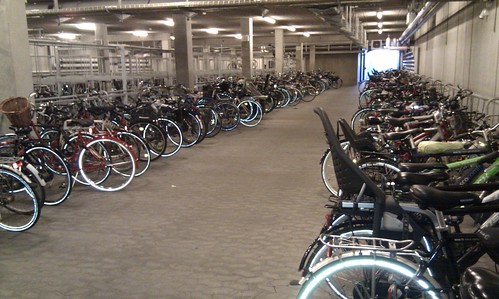
And yes, my bike is there, today as most days. Sometimes sore, sometimes soaked, sometimes just happy to have gotten here on time - but I live 10 minutes away by bike, and I love it.
Well, Copenhagen has revealed several of my bad habits.
At first glance, it's extremely easy to ride a bike in Copenhagen. There are the famous Copenhagen lanes separating cars from bikes and pedestrians, and the cutest little traffic lights with red, yellow and green bikes to tell you when to go and when to pause. You go to the tourist information or your hotel or the parking authorithy, and you ask for a bicycle map to find all the best biking routes, and you have donned your helmet - preferably, since you're as vain as me, some fashionable version camouflaged as an elegant hat or a fancy cap, or a smooth helmet painted to match your bike or your outfit. After all, biking in the city, you want to look chic.
Now, off you go - and suddenly you discover the Copenhagen bikers' glare. Danes are pretty polite, and tolerant of tourists, but do mind that glare. Did you pause in the wrong side of the lane? There will be a tingling bell - and a glare. Did you forget to signal your slow-down and stop? There's that glare. Did you turn the wrong direction? A muttered "shit" and that glare, again. Slowly, you'll be getting it: you're doing something wrong, and it's time to figure out what before something happens.
First: signals. If you like me learned about traffic safety and biking in school, then you know about using your hands to signal right and left. However, Copenhagen has a third signal: stop. It's used for stopping at the curb, for turning off to the side to wait for the crossing light, for having reached your destination and stopping to park your bike. You lift a hand (optional which) and hold it straight up, either open or as a fist, doesn't matter. And you preferably do it early, or somebody will hit your from behind, and you'll get a lot more than a glare.
Next: attention. At the beginning you're happy to avoid being hit by cars. Then you start congratulating yourself that you don't hit any pedestrians. Then you discover all the bikers glaring at you, and you realise it's time to look out for other bikers. This is when you learn to look before you turn. You see, the lanes are not one-track lanes, but two and sometimes three or four-track lanes. It works just like with cars, slow to the right, faster to the left. Once you have passed your obstacle, you fall in to the right again. Unless you're chatting with your friend at your side. Danes can talk and bike at the same time. Astounding capacity. When you're at that level, you stop caring about the glare, because you're riding with that easy balanced arrogance that comes with knowing you're looking better and getting stronger and more healthy with every turn of the wheel. Yeah, they look good.
Anyway, about that attention. Don't let those good looks distract you. What you're looking for is traffic, and you need to learn how to anticipate it. See that group of people and the bus just pulling in? They will pass through the bike lane in a second. See those tourists messing around, waiting to cross? They don't know about the bike lane, and they will block you. And behind you - catch that faint hum? You're being overtaken, and you need to check for that if you plan to shift out to pass the biker in front of you. And DO mind the red lights. Biking like a maniac to the next light just to have to stop is a waste of energy. Ease up slowly, and hope it shifts to green before you have to stop. It's not like there's always a railing to hang on to. But you're learning.
Soon you'll discover the more subtle signs of Danish biking culture. Like the turned up or tucked in right pant-leg. In the summer half of the year it's mostly turned up, to avoid getting the pants into the chain. That's when you'll notice another little subtle thing: when you wear sandals and your pants are short or tucked up, your ankle tattoo will show! That is, of course, given that you have biked around in Christiania or downtown for long enough to decide you really want a nice little decoration on your right ankle. I have never before seen that many ankle tattoos as I saw this summer, tucked neatly between the shoe and the short or turned-up pants.
Now you're ready for another difficult biking exercize: finding a parking spot. I know people who don't bike in Copenhagen because it's such a hazzle to park. Yeah. But don't despair - despite the many angry glares you'll get if you put your bike in front of shop windows, there are thousands of designated parking spots all over town. And some of them are pretty damn good. Like the ITU basement, which is to a large extent dedicated to parking bicycles.
And yes, my bike is there, today as most days. Sometimes sore, sometimes soaked, sometimes just happy to have gotten here on time - but I live 10 minutes away by bike, and I love it.
Monday, September 06, 2010
Is there a rythm to gaming?
All who have played games know there is a rythm to them, an ebb and flow of activity and energy, back and forth, sometimes like a tango where the participants are evenly matched and push, give and counter with intense focus, sometimes like the inexorable march of the invading feet as the stronger participants lay waste to all opposition. From the lighthearted singsong of easy togetherness to the complex concert of a well-rehearsed team, yes, there is a rythm to play and to games.
But to gaming, as a phenomenon? Is there a flow and counter, an emerging patterns of back and forth, intensity and slack? I don't know, but Tom Apperley is looking for it. In his quite new and fresh book Gaming Rhythms: Play and Counterplay from the Situated to the Global the topic appears to be an assumption of interconnectedness of gaming practices, globally.
It is an extremely interesting thought, and I am looking forwards to seeing there Tom Apperley takes it.
But to gaming, as a phenomenon? Is there a flow and counter, an emerging patterns of back and forth, intensity and slack? I don't know, but Tom Apperley is looking for it. In his quite new and fresh book Gaming Rhythms: Play and Counterplay from the Situated to the Global the topic appears to be an assumption of interconnectedness of gaming practices, globally.
It is an extremely interesting thought, and I am looking forwards to seeing there Tom Apperley takes it.
Wednesday, August 25, 2010
When businesses discover games
From my friend Esther Ewing, a link to some talks published in TED: When games invade real life by Jesse Schell, and The game layer on top of the world by Seth Priebatsch.
Both talks focus on how gaming is becoming the new money-maker, and how it is possible to learn from game design in order to make more and more money. In Priebatsch' presentation the main topic is the connection between farmville and facebook, and how farmville can stop the world. Schell's presentation is a pretty dystopic discussion of a totalitarian surveillance state where game strategies are used to make people serve the system - mainly the commercial system.
Although it doesn't really bring anything new to gaming, these talks are interesting for a few reasons.
First: They don't bother to mention that what we are really seeing is that game designers are using techniques used in advertising since late 1700, not "new and fantastic" strategies developed by game designers. After all, letting people know that games are just doing what PR departments have done since Barnum would not pay as well - nor play as well.
Second: They don't care about the GAME part of gaming, only about the score, grind and production part. Which means they forget what a game is. An example used by Jesse Schell is Lee Sheldon's grading levels, where he lets students level up in class. That's cool, really, the grading systems in most Universities are outdated and inflexible, and doesn't really provide detailed feedback. However, changing the grading system isn't a novel idea! In Sunday school we got gold stars if we were good, and went there to collect those stars. Well, I was bad, so I hardly ever had any, but what's the difference between a gold star and a level, and why is it novel?
Still, it's an interesting way to spend some time, to see how gaming is now an acceptable metaphor for "new ways to make people do what we want, without complaining." Enjoy.
---
Update: I tried to remember where I touch - briefly - on games as totalitarian systems, and it's in the upcoming article in one of the next issues of this year's Journal of Gaming and Virtual Worlds. There, now I pitched myself a little too.
Both talks focus on how gaming is becoming the new money-maker, and how it is possible to learn from game design in order to make more and more money. In Priebatsch' presentation the main topic is the connection between farmville and facebook, and how farmville can stop the world. Schell's presentation is a pretty dystopic discussion of a totalitarian surveillance state where game strategies are used to make people serve the system - mainly the commercial system.
Although it doesn't really bring anything new to gaming, these talks are interesting for a few reasons.
First: They don't bother to mention that what we are really seeing is that game designers are using techniques used in advertising since late 1700, not "new and fantastic" strategies developed by game designers. After all, letting people know that games are just doing what PR departments have done since Barnum would not pay as well - nor play as well.
Second: They don't care about the GAME part of gaming, only about the score, grind and production part. Which means they forget what a game is. An example used by Jesse Schell is Lee Sheldon's grading levels, where he lets students level up in class. That's cool, really, the grading systems in most Universities are outdated and inflexible, and doesn't really provide detailed feedback. However, changing the grading system isn't a novel idea! In Sunday school we got gold stars if we were good, and went there to collect those stars. Well, I was bad, so I hardly ever had any, but what's the difference between a gold star and a level, and why is it novel?
Still, it's an interesting way to spend some time, to see how gaming is now an acceptable metaphor for "new ways to make people do what we want, without complaining." Enjoy.
---
Update: I tried to remember where I touch - briefly - on games as totalitarian systems, and it's in the upcoming article in one of the next issues of this year's Journal of Gaming and Virtual Worlds. There, now I pitched myself a little too.
Tuesday, August 17, 2010
Desire, art and the metro
This morning it was raining in a far too familiar way, so I decided to get on the metro rather than the bicycle. Cycling is quicker, but I wanted to spend the day at the office fairly dry, so off I went. That turned out to be a really bad decision, since the metro didn't run to where I wanted to go, due to the weather. Yeah.
However, in a way it was a good decision. In Kongens Nytorv, my local station, there's an art installation this week by a group calling themselves Urban Forest. Through music, soft lightening and moving images, they want to turn the otherwise pretty drab and functionalistic metro station into a very different experience.
I watched the flowing images for a minute, cursing myself for leaving the camera behind, when I realised that - hey, I hadn't! After all, in my pocket recided my new übergadget, the new smartphone!

In a few seconds I was clicking away. The connection down at the bottom of the Nytorv station was however too weak to upload, and by the time I had realised my train was never coming, I had to take another and then change at the next stop, and the train at the next stop was never coming and I had to walk, well, uploading was out of my mind.
Still, it's only a few hours later, and I got to upload through the ITU wireless. The pictures were surprisingly good, considering they were taken with a phone in very low light, in the morning rush.
Sunday, August 15, 2010
Moving to Denmark - August edition 2010
In a lot of ways, the move to Denmark has been much smoother and easier than the move (for a year) to Sweden. Most important is probably that I knew both Copenhagen and ITU pretty well, while I had never been to Umeå nor Umu before I went there.
I think one of the things that has made it all much easier, is that I got a personal number, or CPR - central personal registry number (?) right away. With that I got a dancard, which appears to be THE card all danes carry, a health card, and could immediately get the correct taxes and get into the ITU salary rolls. Money is useful stuff.
Next, I knew a lot more people when I arrived to Copenhagen. I have been here a month, and will have to spend a month (well, the week-ends) just inviting people over for dinner to make up for the generousity I have met. In Copenhagen I have semi-adopted family, colleagues I am really happy to meet again after 12 years on the same conference tracks, colleagues I think of as friends and LOVE to hang with, people I have met online who turned out to be fun company, and the Copenhagen members of the guild Tooth and Claw, who showed up at my door, filled my tiny apartment until it was about to burst, and then dragged me out into fresh night air for drinks and geekery. Copenhagen has made me feel welcomed indeed.
While I loved the place I lived in Umeå, I am exstatic about this neighbourhood. I live right downtown Copenhagen, by the both famous and infamous Nyhavn, in a lovely street just busy enough that I feel I live in a city, and peaceful enough that I don't feel any of the aggravation people report from living in cities. There's life, but no mind-wrecking noise making me dream of water on pebbles - the nightly noise of Volda. Well, at least not yet.
School hasn't started yet, but I am to teach two classes, Digital Rhetorics and Digital Culture and Society. I am exited both about the topics and about the people I am to cooperate with: Lisbeth and TL are wonderful people I have always felt inspired by. It makes me want to stretch, and I am looking forwards to engaging with the topics.
There's still a lot to be done, but I now have to leave a large chunk of it to my husband. He has to finish up in Volda, before I can seriously engage with finding a place to live for us all here. Right now there's a buyer's market on property, and if we're lucky, we won't have to turn to begging to get a place we like to live in.
Now, excuse me. I have to go explore what the clapping and cheering is about, at the harbour. It does sound like fun.
I think one of the things that has made it all much easier, is that I got a personal number, or CPR - central personal registry number (?) right away. With that I got a dancard, which appears to be THE card all danes carry, a health card, and could immediately get the correct taxes and get into the ITU salary rolls. Money is useful stuff.
Next, I knew a lot more people when I arrived to Copenhagen. I have been here a month, and will have to spend a month (well, the week-ends) just inviting people over for dinner to make up for the generousity I have met. In Copenhagen I have semi-adopted family, colleagues I am really happy to meet again after 12 years on the same conference tracks, colleagues I think of as friends and LOVE to hang with, people I have met online who turned out to be fun company, and the Copenhagen members of the guild Tooth and Claw, who showed up at my door, filled my tiny apartment until it was about to burst, and then dragged me out into fresh night air for drinks and geekery. Copenhagen has made me feel welcomed indeed.
While I loved the place I lived in Umeå, I am exstatic about this neighbourhood. I live right downtown Copenhagen, by the both famous and infamous Nyhavn, in a lovely street just busy enough that I feel I live in a city, and peaceful enough that I don't feel any of the aggravation people report from living in cities. There's life, but no mind-wrecking noise making me dream of water on pebbles - the nightly noise of Volda. Well, at least not yet.
School hasn't started yet, but I am to teach two classes, Digital Rhetorics and Digital Culture and Society. I am exited both about the topics and about the people I am to cooperate with: Lisbeth and TL are wonderful people I have always felt inspired by. It makes me want to stretch, and I am looking forwards to engaging with the topics.
There's still a lot to be done, but I now have to leave a large chunk of it to my husband. He has to finish up in Volda, before I can seriously engage with finding a place to live for us all here. Right now there's a buyer's market on property, and if we're lucky, we won't have to turn to begging to get a place we like to live in.
Now, excuse me. I have to go explore what the clapping and cheering is about, at the harbour. It does sound like fun.
Tuesday, July 27, 2010
IR 11.0 and accomodations
Ted Copman has started collecting information for a wiki, with travel tips for Gothenburg and IR 11.0. Useful stuff indeed!
Thursday, July 22, 2010
First day at school!
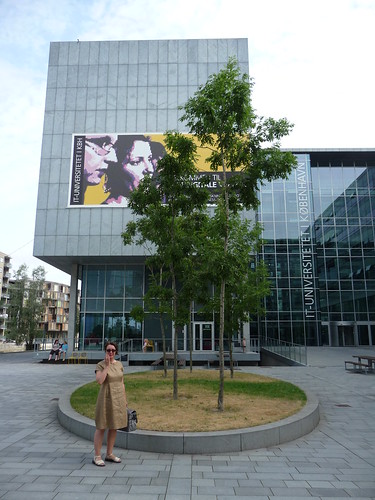
I have worked here a whole week now, but still feel a little awed by this high-tech building, trying to get into being here. The place is empty and quiet during the holidays, and it's also opressively hot. So is all of Copenhagen though, it's really different for a poor Norwegian dumped here.
The reception was wonderful. Flowers, a grand tour with our appointed guides, and introductions all around. Another colleague started at the same time: Adriana Araujo de Souza e Silva. Coming from Brazil, I suspect she's more used to the weather here right now than I am. I'll have to show off my autumn survival skills later.
I am slowly getting my head around some of all the things that need to be set. So far it's running a lot more smoothly than when I went to Sweden, but that may be because I am more prepared for the difficulties of changing countries. The Danes seem more familiar though, than the Swedes - a bit more easy-going and less formal. I am sure I'll be clobbered over the head with differences any minute now, though. I have a new phone, a new account (no money yet though), a place to live and a vague map of the place in my head. For a woman who's used to navigating by "up" and "down" this "flat" is somewhat disturbing. I lose the sense of distance, and there appear to be no limits the the sprawl of the city.
One thing is very different. I have managed to get a tan. Now, if you live in a place on the planet where most of the time is spent avoiding the sun, you have no idea how different this is. But for us who are more familiar with full-body rain wear than with sunblock, a tan is something to be desired and cherished, both for the variation (for once, not vampire wannabe) and for the health effects. Sunlight can not only cause cancer, but also protect against it. At the same time vitamin D is vital to protect against a lot of other cancers. This last article is interesting, by the way, as it's questioning one of the great dietary myths: That of the benefits of polyunsaturated fats.
Finally research is starting to see what Scandinavians have known for ever: sunlight is good for your health. And so you'll find us on the beaches, at the pools, on verandas, in gardens, stripped of as much clothing as we can for decency remove, and ready to soak up those rays.
Me, I am still trying to get some things in place before I hit the beach. I will though, believe me, I will.
Tuesday, July 06, 2010
Transition
I am not writing much these days. I wake up in the morning, and start sorting something. Everything goes into one of three categories: throw, give away, keep. Then the "keep" stack is split into pack, use, Copenhagen now.
The biggest challenge were the books. We have reduced 25 years of collecting books to one (full) book cabinet. There's no way I am throwing out the graphic novels, those are still stored here and there through the house. The books got split into keep, give away, and store in a secret location until we can't keep them there any more and need to do something about it.
I have gone through letters, clothes, drawings, several drafts to the greatest Norwegian novel in modern times, a million pictures (keep) and a seemingly endless amount of pens and pencils in the strangest places. The kids kept some of their toys, but I am keeping more... Like the little red and white cat, that had to get its head sewn back on. And the brown and grey puppy that saved the night so many times. That beautiful puzzle that was the advent gift one year. The red christmas dress she wore when she left the table to raid the bags of her aunt, eating bread with brown cheese under the table while the rest sat down for the Christmas evening dinner.
It's wonderful and sweet, and I keep letting go of so many things. The letters - it's incredible how many letters we used to write once. Ribbons, cheap jewelry, old glasses, ugly promotional mugs. When we sell the house and get rid of most of the furniture, we'll be where I planned: having reduced the clutter in my life by at least half. My husband eyes the beautiful glasses in the cabinet with an evil eye. I told him to pick one glass he could do without. He found two. When I showed him which I wanted to be without, he refused. Those were the ones he liked. He is as bad as me. I find him lost in old diaries, digging through old letters. He touches hand-knitted sweaters with a loving hand, muttering about how wonderful those were, once, how much pleasure we had from them. Old tickets, old passports, scraps saved in order to make a scrap book - he savours them, and I sneak in behind him and trash what he puts down for too long.
We are getting there, though. I have sorted out the plates and cups we don't want to keep, knives and forks, CDs and videos. We have even sorted coins. Today I packed my shoes: use, store, bring, thrash. The boy laughed, and shook his head when I tried on all the pairs. I managed to get rid of - mainly to the salvation army - 10 pairs. I didn't count how many I kept. I took pictures though, of the shoes lined up on the livingroom floor, looking like they were planning an escape through the door.
It's raining and cold. I think I'll be able to leave this place. But the roots have to be severed string by string, trashed, stored or to be brought with me.
The biggest challenge were the books. We have reduced 25 years of collecting books to one (full) book cabinet. There's no way I am throwing out the graphic novels, those are still stored here and there through the house. The books got split into keep, give away, and store in a secret location until we can't keep them there any more and need to do something about it.
I have gone through letters, clothes, drawings, several drafts to the greatest Norwegian novel in modern times, a million pictures (keep) and a seemingly endless amount of pens and pencils in the strangest places. The kids kept some of their toys, but I am keeping more... Like the little red and white cat, that had to get its head sewn back on. And the brown and grey puppy that saved the night so many times. That beautiful puzzle that was the advent gift one year. The red christmas dress she wore when she left the table to raid the bags of her aunt, eating bread with brown cheese under the table while the rest sat down for the Christmas evening dinner.
It's wonderful and sweet, and I keep letting go of so many things. The letters - it's incredible how many letters we used to write once. Ribbons, cheap jewelry, old glasses, ugly promotional mugs. When we sell the house and get rid of most of the furniture, we'll be where I planned: having reduced the clutter in my life by at least half. My husband eyes the beautiful glasses in the cabinet with an evil eye. I told him to pick one glass he could do without. He found two. When I showed him which I wanted to be without, he refused. Those were the ones he liked. He is as bad as me. I find him lost in old diaries, digging through old letters. He touches hand-knitted sweaters with a loving hand, muttering about how wonderful those were, once, how much pleasure we had from them. Old tickets, old passports, scraps saved in order to make a scrap book - he savours them, and I sneak in behind him and trash what he puts down for too long.
We are getting there, though. I have sorted out the plates and cups we don't want to keep, knives and forks, CDs and videos. We have even sorted coins. Today I packed my shoes: use, store, bring, thrash. The boy laughed, and shook his head when I tried on all the pairs. I managed to get rid of - mainly to the salvation army - 10 pairs. I didn't count how many I kept. I took pictures though, of the shoes lined up on the livingroom floor, looking like they were planning an escape through the door.
It's raining and cold. I think I'll be able to leave this place. But the roots have to be severed string by string, trashed, stored or to be brought with me.
Thursday, June 10, 2010
It feels final
It isn't, really, because I have a two year leave, leaving myself the option to turn around and come back to this hideout between the mountains. This hole, my sister so lovingly describes Volda as, and she's right, it is a hole in which to hide, a sudden green spot in between black mountains. And I have been crawling back into it over and over again over the last 19 years, hiding in between my expeditions into the world.
Somehow, living in Volda, the distinction between "real" and "virtual" world feels meaningless. What's real about living here? It's so secluded, so filled with its own rules, concerns and moving by its own rythm that living in the flesh world of Volda is like living in a virtual world. The insane beauty of the place, combined with the ruthless weather, the heavy darkness and the dreariness of the third month of rain and sleet, it turns Volda into something on the flip-side of other flesh world realities. At the same time - this is it. This is the reality, because reality is made up of a million little spots like this, places of heartbreaking beauty and equally numbing mundaneity, spread like random handfuls of marbles all over the planet.
The distinction between places is more than anything, a state of mind, and somehow I suspect the Volda state of mind won't stay behind. There's a tale in Norway, about the man who got into a fight with his house "nisse", the otherworld power living on his farm, traditionally bound to the land. At the end he gave up, sold the farm and moved. Among his stuff, however, the nisse was happily singing "we're moving today."
There are parts of Volda I hope I'll never leave behind. The easy assumption that people care, the sudden closeness in times of need, the long-term strategies to protect and care for the community, those are all some of the best qualities of small-town life. And there is a nisse I really hope doesn't come with me: the pettiness, the lack of generousity towards that which is unknown, the selfish scheming, the xenophobia. Sadly, I suspect that I'll find that wherever I go, that part of human nature was there before me.
As for the college? I have loved and hated this place for 19 years. I really need to work somewhere else, at least for a while, if I want to stretch and develop beyond my own comfort zone. But I am not fleeing. I am making a strategic move, keeping the lines of retreat open. Yep, sounds much better that way.
And now the bookshelves are slowly emptying. As I write, I have barely finished F. I have quite a few boxes to go. I'll get there though, and then me and my boxes and my past will move from this early-70ies built-quickly-and-cheaply crooked box into the glass-and-steel high modernity of ITU. Oh my.
Somehow, living in Volda, the distinction between "real" and "virtual" world feels meaningless. What's real about living here? It's so secluded, so filled with its own rules, concerns and moving by its own rythm that living in the flesh world of Volda is like living in a virtual world. The insane beauty of the place, combined with the ruthless weather, the heavy darkness and the dreariness of the third month of rain and sleet, it turns Volda into something on the flip-side of other flesh world realities. At the same time - this is it. This is the reality, because reality is made up of a million little spots like this, places of heartbreaking beauty and equally numbing mundaneity, spread like random handfuls of marbles all over the planet.
The distinction between places is more than anything, a state of mind, and somehow I suspect the Volda state of mind won't stay behind. There's a tale in Norway, about the man who got into a fight with his house "nisse", the otherworld power living on his farm, traditionally bound to the land. At the end he gave up, sold the farm and moved. Among his stuff, however, the nisse was happily singing "we're moving today."
There are parts of Volda I hope I'll never leave behind. The easy assumption that people care, the sudden closeness in times of need, the long-term strategies to protect and care for the community, those are all some of the best qualities of small-town life. And there is a nisse I really hope doesn't come with me: the pettiness, the lack of generousity towards that which is unknown, the selfish scheming, the xenophobia. Sadly, I suspect that I'll find that wherever I go, that part of human nature was there before me.
As for the college? I have loved and hated this place for 19 years. I really need to work somewhere else, at least for a while, if I want to stretch and develop beyond my own comfort zone. But I am not fleeing. I am making a strategic move, keeping the lines of retreat open. Yep, sounds much better that way.
And now the bookshelves are slowly emptying. As I write, I have barely finished F. I have quite a few boxes to go. I'll get there though, and then me and my boxes and my past will move from this early-70ies built-quickly-and-cheaply crooked box into the glass-and-steel high modernity of ITU. Oh my.
Subscribe to:
Posts (Atom)


 Posts
Posts


